Albania Signs Europe’s AI and Human Rights Convention
By Suad Seferi ·
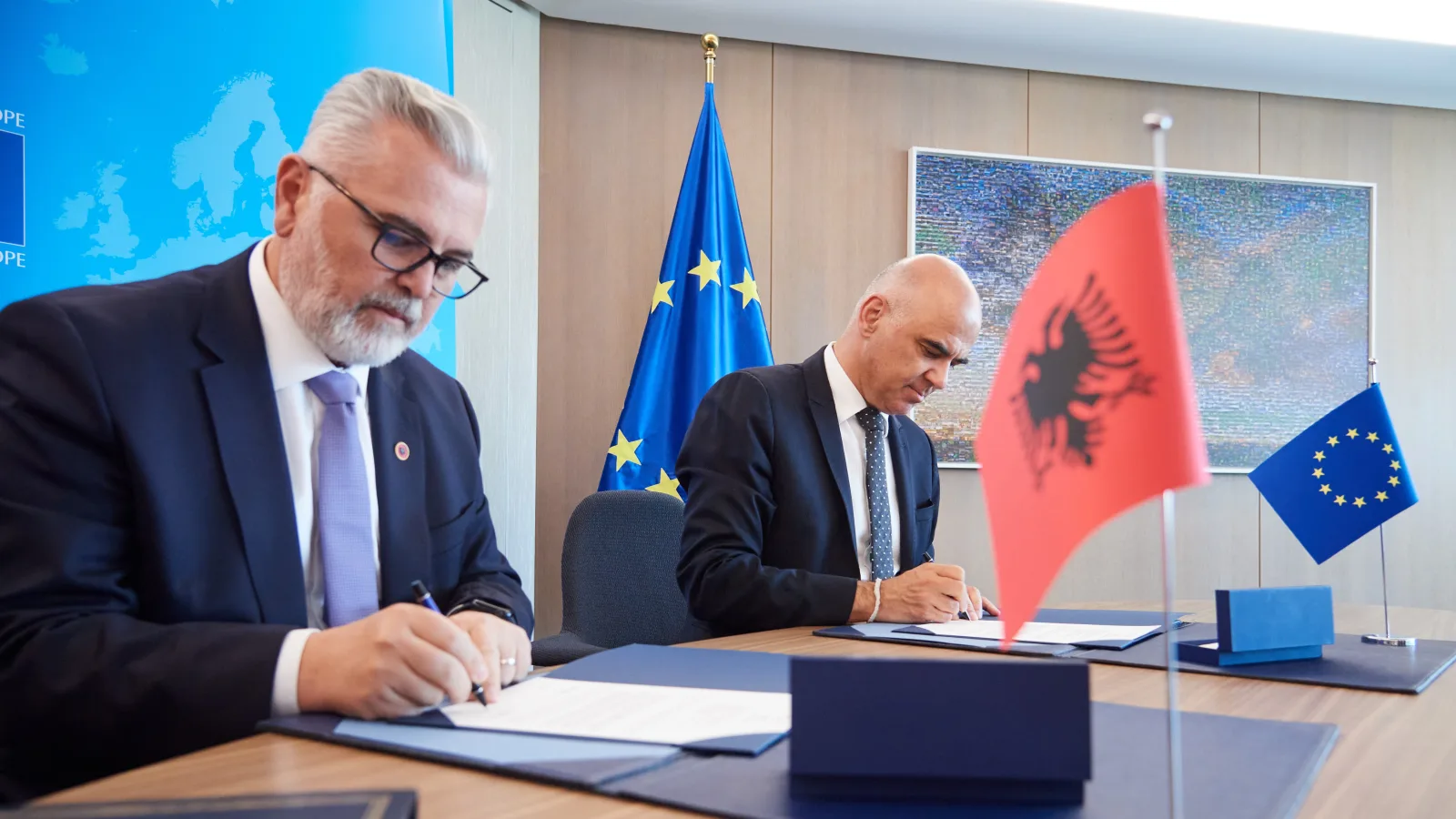
Albania has signed the Council of Europe’s Framework Convention on Artificial Intelligence, Human Rights, Democracy and the Rule of Law, joining a growing group of countries that are committing to regulate AI through a human-rights-based approach. The signing took place on 15 June 2026 and was announced by the Council of Europe shortly after. This is an important step for Albania because the convention is the first international legally binding treaty focused specifically on artificial intelligence. Its purpose is to make sure that AI systems are developed and used in ways that respect human rights, democratic principles and the rule of law. For Albania, the signing comes at a time when artificial intelligence is becoming a more visible part of public policy. The country has already attracted international attention for experimenting with AI in government services and public procurement. Now, by joining the Council of Europe framework, Albania is also signaling that AI development must be connected to legal responsibility and institutional safeguards. The convention does not focus only on technical standards. It focuses on the impact AI can have on people and society. This includes risks connected to discrimination, privacy, transparency, access to justice, democratic processes and the protection of citizens from unfair automated decisions. By signing the convention, Albania is aligning itself with a wider European approach to artificial intelligence. This is especially relevant because Albania is also pursuing closer integration with the European Union. As AI regulation becomes part of the European legal and political agenda, countries that want to move closer to European standards will need to show that they can manage both innovation and risk. The convention also matters for public trust. Artificial intelligence can bring faster services and better decision-making, but citizens are often concerned about how AI systems use personal data and whether automated tools can be biased or unfair. A human-rights framework can help create clearer expectations about how AI should be used by governments and companies. For public institutions, the signing means that Albania will need to think seriously about oversight. AI systems used in public administration, policing, courts, healthcare, education or social services cannot be treated like ordinary software. They may affect people’s rights and opportunities, so they require transparency, accountability and human control. The agreement also strengthens the idea that artificial intelligence should not be used to weaken democracy. AI tools can influence public debate, generate misleading content, manipulate information or affect electoral processes. The Council of Europe framework recognizes these risks and places democratic integrity at the center of AI governance. For businesses and technology developers in Albania, the convention could create a clearer direction for future regulation. Companies that build AI systems will increasingly need to consider not only performance and profit, but also fairness, data protection and explainability. This may create new obligations, but it can also help build trust in Albanian AI products and services. The signing does not automatically solve Albania’s AI governance challenges. Implementation will be the key issue. Albania will need laws, institutions, technical capacity and independent oversight mechanisms to make the principles of the convention meaningful in practice. Still, the move is significant. It shows that Albania wants to participate in international AI governance rather than remain outside the process. As artificial intelligence becomes more powerful, countries will be judged not only by how quickly they adopt it, but also by how responsibly they manage it. Albania’s signature on the Council of Europe AI Convention places the country within a broader European effort to ensure that technology serves people, instead of putting citizens’ rights at risk. The next stage will be translating that commitment into national rules, public-sector practices and real protections for citizens.