Western Balkans AI Roadmap Presented, Awaiting Leaders' Endorsement
By Suad Seferi ·
Key takeaways
- The Western Balkans AI Roadmap through 2030 was presented at the 2026 Digital Summit in Herceg Novi, Montenegro.
- Government representatives from all six Western Balkan economies participated in the summit's ministerial discussions.
- The Regional Cooperation Council developed the roadmap with regional partners, focusing on responsible AI adoption, governance, innovation and alignment with European standards.
- The RCC stated that formal endorsement was expected at the Berlin Process Leaders' Summit. Participation at the Digital Summit does not establish formal governmental approval.
- North Macedonia highlighted its Vezilka AI project and digital identity initiatives during the discussions.
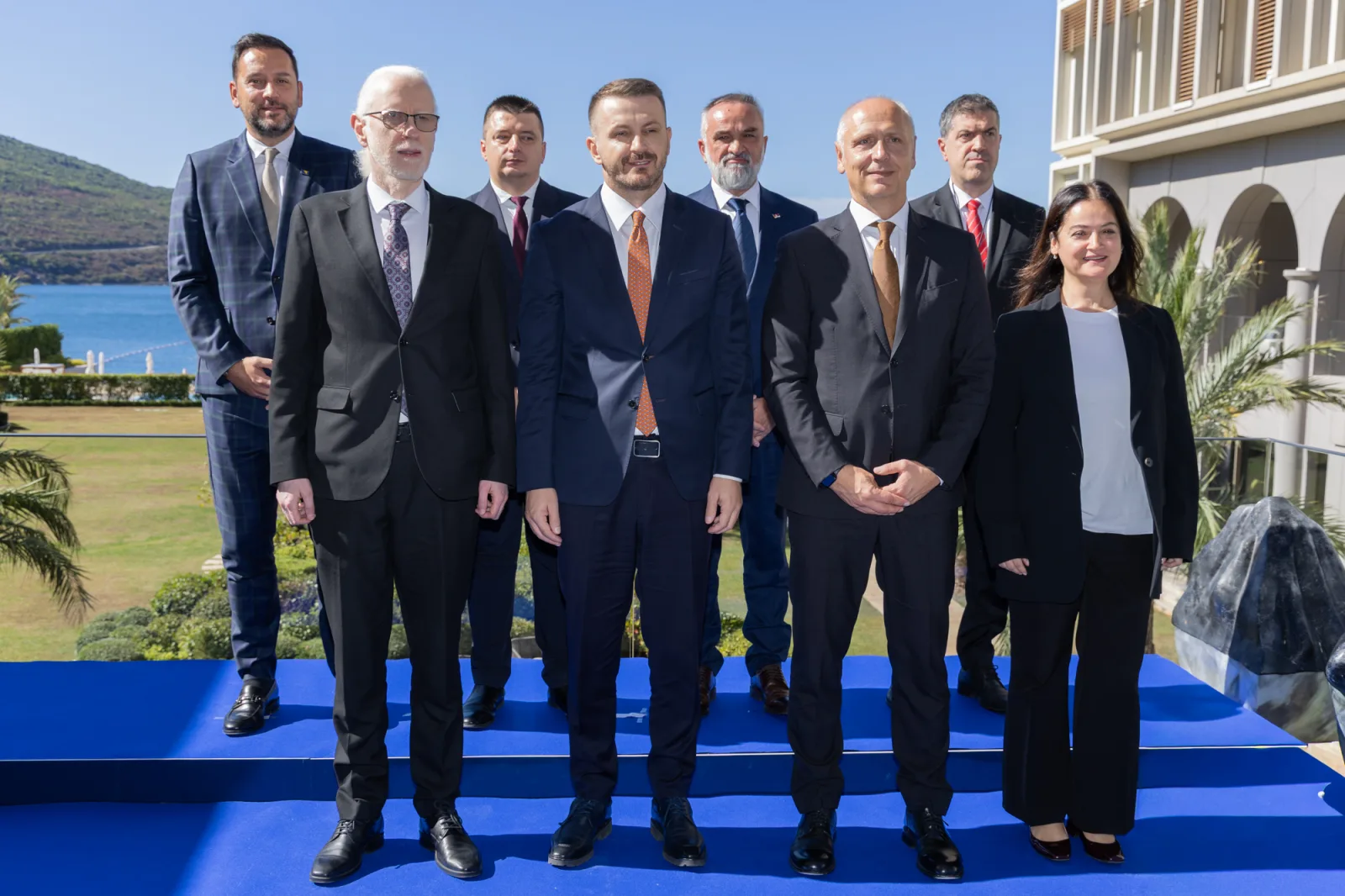
A regional AI roadmap extending to 2030 was presented at the Western Balkans Digital Summit in Montenegro, where government representatives from all six Western Balkan economies discussed digital cooperation, artificial intelligence and closer alignment with European standards. The eighth Western Balkans Digital Summit, held on October 13–14 in Herceg Novi, brought together government officials, European Union representatives, international organisations and technology-sector participants. According to the Regional Cooperation Council (RCC), the summit welcomed the AI Roadmap for the Western Balkans Six, developed by the RCC together with regional partners. The document is intended to establish a common direction for responsible AI development, governance, innovation and institutional readiness across the region. However, an important step remains. The RCC's October 14 announcement states that the roadmap is expected to receive endorsement at the forthcoming Berlin Process Leaders' Summit. That distinction matters because the presentation and political welcome of a regional initiative do not necessarily constitute formal approval by every participating government. Six Western Balkan economies represented The summit was organised by Montenegro's Ministry of Public Administration in partnership with the RCC, the European Union and other regional and international partners, under Montenegro's 2026 chairmanship of the Berlin Process. Government representatives from Albania, Bosnia and Herzegovina, Kosovo, Montenegro, North Macedonia and Serbia took part in the summit's ministerial panel. North Macedonia was represented by Radoslav Nastasijević Vardarski, Deputy Minister of Digital Transformation, while Albania was represented by Enkelejda Muçaj, Deputy Minister of Infrastructure and Energy. Kosovo's representative was Lulzon Jagxhiu, Minister of Public Administration and Digitalization, and Montenegro was represented by Marash Dukaj, Minister of Public Administration. Bosnia and Herzegovina participated through Almir Badnjević, Director of the Agency for Identification Documents, Registers and Data Exchange (IDDEEA), while Serbia was represented by Slaviša Antić, State Secretary at the Ministry of Information and Telecommunications. The ministerial panel, moderated by the RCC's Danijela Gačević, addressed digital transformation, regional cooperation and alignment with European digital standards. RCC Secretary General Amer Kapetanović also addressed the summit, alongside representatives of EU institutions and international partners. Their participation confirms that the meeting involved regional government representatives. It does not, by itself, establish that each government formally approved the AI roadmap. North Macedonia highlights Vezilka and digital identity During the ministerial discussions, North Macedonia's Deputy Minister Radoslav Nastasijević Vardarski highlighted Vezilka, the country's national AI project, as an initiative of national importance. Another representative of the Ministry of Digital Transformation, Ivan Ilioski, participated in a separate discussion focused on digital identity wallets, one of the country's priorities for modernising electronic public services. These initiatives reflect North Macedonia's national digital priorities, although their inclusion in summit discussions should not be interpreted as evidence of new commitments under the regional AI roadmap. The wider programme addressed digital public services, cybersecurity, infrastructure, AI readiness and digital skills. What the AI roadmap proposes According to the RCC, the AI Roadmap for the Western Balkans Six is designed to support coordinated development and responsible use of artificial intelligence. Its publicly described priorities include improving institutional readiness, strengthening AI governance, encouraging innovation and bringing regional approaches closer to European standards. These areas are particularly relevant as Western Balkan governments expand their use of digital public services and consider how artificial intelligence could be incorporated into public administration and economic development. A regional framework could help participating economies exchange expertise, coordinate approaches and identify shared challenges. Nevertheless, the publicly available summit announcements do not establish specific national funding obligations, binding implementation deadlines or enforceable AI governance measures arising from the roadmap. Those details will be important in determining how the proposed framework moves beyond political agreement into implementation. Regional cooperation extends beyond AI Artificial intelligence was one part of a wider digital agenda discussed during the two-day gathering. The summit's conclusions identified priorities including mutual recognition of digital identities, implementation of interoperable digital identity wallets, stronger cybersecurity cooperation, improved connectivity and efforts to reduce roaming costs between the Western Balkans and the European Union. The conclusions also envisaged continued RCC support for implementing the AI roadmap and coordinating regional digital initiatives. In his opening address, RCC Secretary General Amer Kapetanović emphasised that regional digital transformation should focus on connecting national systems rather than developing isolated services. The RCC has supported the Western Balkans Digital Summit since its establishment in 2018. The previous edition was held in Skopje in October 2025. What happens next Although Montenegro hosted the summit, the roadmap is an RCC-led regional initiative developed with partners from across the Western Balkans. Montenegro's Ministry of Public Administration described the roadmap in its October 18 announcement as having been presented and adopted at the summit. The RCC's official account uses more cautious language, saying that the roadmap was welcomed and that endorsement at the…
Frequently asked questions
What is the Western Balkans AI Roadmap 2030?
It is an RCC-led regional initiative intended to guide cooperation on AI readiness, governance, innovation and responsible adoption through 2030.
Which countries participated in the summit?
Albania, Bosnia and Herzegovina, Kosovo, Montenegro, North Macedonia and Serbia were represented at the ministerial panel.
Has the AI roadmap been formally adopted by all six governments?
The RCC reported that the roadmap was welcomed at the Digital Summit and expected endorsement at the forthcoming Berlin Process Leaders' Summit. Individual formal government approvals have not been established by the cited documents.
Who represented North Macedonia?
Deputy Minister of Digital Transformation Radoslav Nastasijević Vardarski participated in the ministerial discussions. Ivan Ilioski also participated in a separate panel on digital identity initiatives.
What happens after the summit?
The next expected step is endorsement through the Berlin Process, followed by clarification of implementation responsibilities, financing and any national commitments.