Sarajevo AI Summit Opens Research Stage for 2026
By Suad Seferi ·
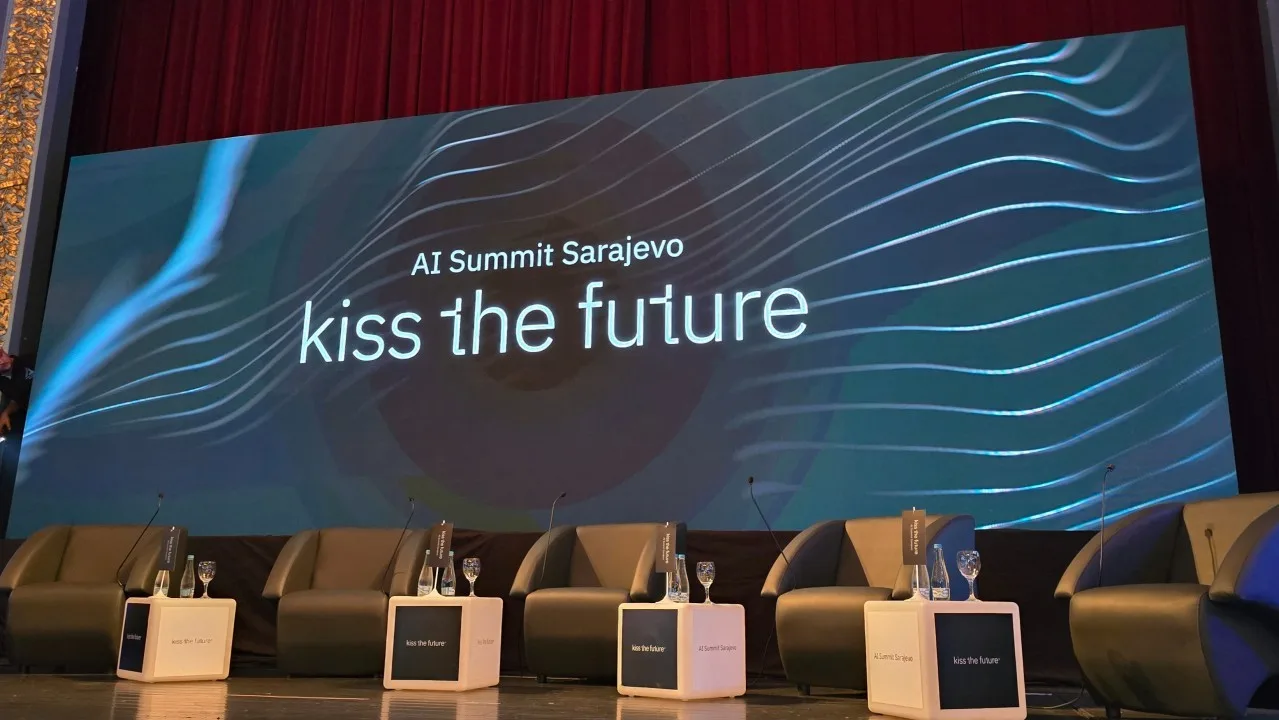
Sarajevo’s largest artificial intelligence gathering is expanding its focus beyond technology companies and conference speakers, inviting students and researchers to present their own work at this year’s Kiss the Future AI Summit. The summit, scheduled for October 15 and 16, has opened submissions for a new Research Stage covering artificial intelligence, intelligent systems, energy and sustainability. Applications remain open until July 31. Students, early-career researchers and research teams can submit completed studies, work-in-progress ideas or research posters. Selected participants will present their work during the summit, while one emerging researcher will receive mentorship through Sarajevo’s Blum Institute. The addition matters because many technology events across the region still focus heavily on global trends, corporate products and well-known speakers. Giving local researchers space to present their work could help connect universities, young engineers and companies that often operate separately. The summit organisers say they expect more than 2,000 participants, over 70 speakers and representatives from more than 30 companies across several thematic stages. The first announced speakers include professionals from GitHub, Databricks, Red Hat, Supabase, ElevenLabs and other international technology organisations. But the more important question for Bosnia and Herzegovina is what remains after the stages are dismantled. The country has a growing technology sector, strong engineering talent and an increasingly visible AI community. What it still lacks is a mature national ecosystem capable of consistently turning research into products, public-sector tools and companies that can grow without immediately moving their work abroad. The Research Stage appears designed to address part of that gap. Submissions can take the form of oral presentations, research posters or “tiny papers”—short papers of up to 500 words for early-stage ideas and preliminary findings. Research topics may include generative AI, large language models, ethical AI governance, robotics, autonomous systems, smart grids, renewable-energy forecasting and climate technology. That range also reflects a wider shift in the AI conversation. The focus is gradually moving away from chatbots alone and towards how artificial intelligence might be used in energy, industry, transport and other sectors where Bosnia already has technical experience. This is particularly relevant for a country with a long engineering tradition but limited investment in modern research infrastructure. Blum Institute, which organises the summit together with technology company Bloomteq, describes itself as Bosnia and Herzegovina’s first institute dedicated to artificial intelligence research and development. It works with universities including the University of Sarajevo’s Faculty of Electrical Engineering, the Faculty of Traffic and Communications and the International University of Sarajevo. Those partnerships could help establish a stronger bridge between academic work and commercial application. However, the scale of that impact will depend on whether collaboration continues throughout the year, rather than remaining tied to a two-day event. Researchers selected through the open call will be notified in August, with final presentation materials due in September. Their work will be presented in Sarajevo on October 16. For young researchers in Bosnia and the wider Balkans, the opportunity is not only to appear on a conference programme. It is also a chance to place locally developed ideas in front of companies, institutions and researchers who might otherwise never see them. Whether the summit can turn those connections into lasting projects will be the more important measure of success.