AI Took the Stage at Bayreuth. The Audience Rejected It
By Suad Seferi ·
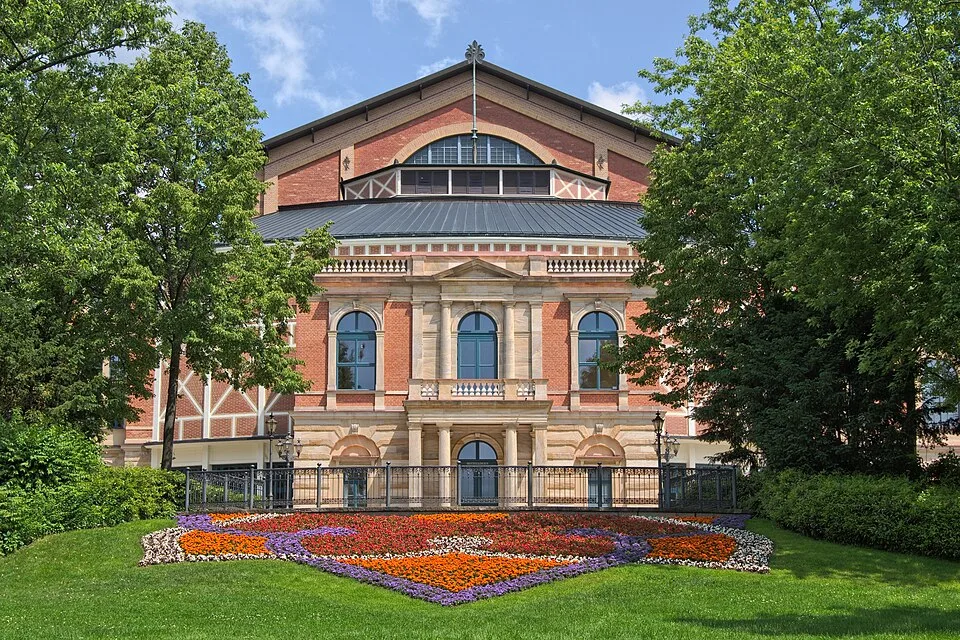
An attempt to bring artificial intelligence onto one of Europe’s most prestigious opera stages ended with boos and whistles from the audience at Germany’s Bayreuth Festival. The reaction followed a performance of Richard Wagner’s Götterdämmerung on Saturday evening, where AI-assisted projections replaced much of the conventional stage design. When curator Marcus Lobbes and his team appeared at the end of the performance, they were met with a strongly negative response. The criticism appeared to be directed at the visual concept rather than the musical performance. The singers, musicians and conductor Christian Thielemann received warm applause, with Thielemann receiving particularly strong recognition from the audience. The production was part of the Bayreuth Festival’s 150th anniversary programme and represented one of the institution’s most direct experiments with generative technology. Festival organisers described artificial intelligence not as a character in the performance, but as an “image-generating force.” The system created constantly changing projections using material selected by Lobbes and his team at the Academy for Theater and Digitality in Dortmund. The images drew from earlier productions of Wagner’s Ring cycle, historical documents and broader political and cultural references. Each performance was intended to be visually different, with images continuously recombined rather than presented as a fixed stage design. For parts of the audience, however, the result was difficult to follow. The projections included images of former German Chancellor Helmut Kohl, a postage stamp commemorating German reunification and the World Trade Center during the September 11 attacks. Instead of strengthening the story being performed, the shifting collage reportedly left some spectators confused about the connection between the images and Wagner’s work. German coverage also noted that the projections occasionally obscured the singers, who remained largely static on stage. This created a sharp contrast between the visual ambition of the technology and the traditional dramatic relationship between performers, space and audience. The response at Bayreuth should not simply be interpreted as proof that audiences are opposed to artificial intelligence in culture. The festival has a long history of controversial and experimental interpretations of Wagner’s work. New productions are regularly debated, criticised and sometimes rejected before being reconsidered years later. The more important issue is whether artificial intelligence contributed something that could not have been achieved through conventional artistic direction. Using AI does not automatically make a performance innovative. When technology becomes the central attraction, it can also compete with the work it is supposed to support. In Bayreuth, the constantly changing images may have offered technical novelty, but many spectators apparently struggled to find a clear artistic argument behind them. That distinction will matter well beyond opera. Theatres, museums, film studios and cultural institutions across Europe are experimenting with generative AI as budgets tighten and creative tools become more accessible. Some will use it quietly within existing production processes. Others will place it directly in front of audiences and present the technology itself as part of the artistic experience. Bayreuth shows the risk of the second approach. Audiences may accept experimentation, but they are unlikely to be persuaded by technology simply because it is new. The festival has two more performances of the AI-assisted production scheduled. Because the system continually changes its visual output, those performances may not look exactly like the one that received the hostile response. The technology will therefore get another opportunity on the Bayreuth stage. Whether the audience will respond differently is another question.