North Macedonia Introduces AI as an Elective Subject in Secondary Schools
By Suad Seferi ·
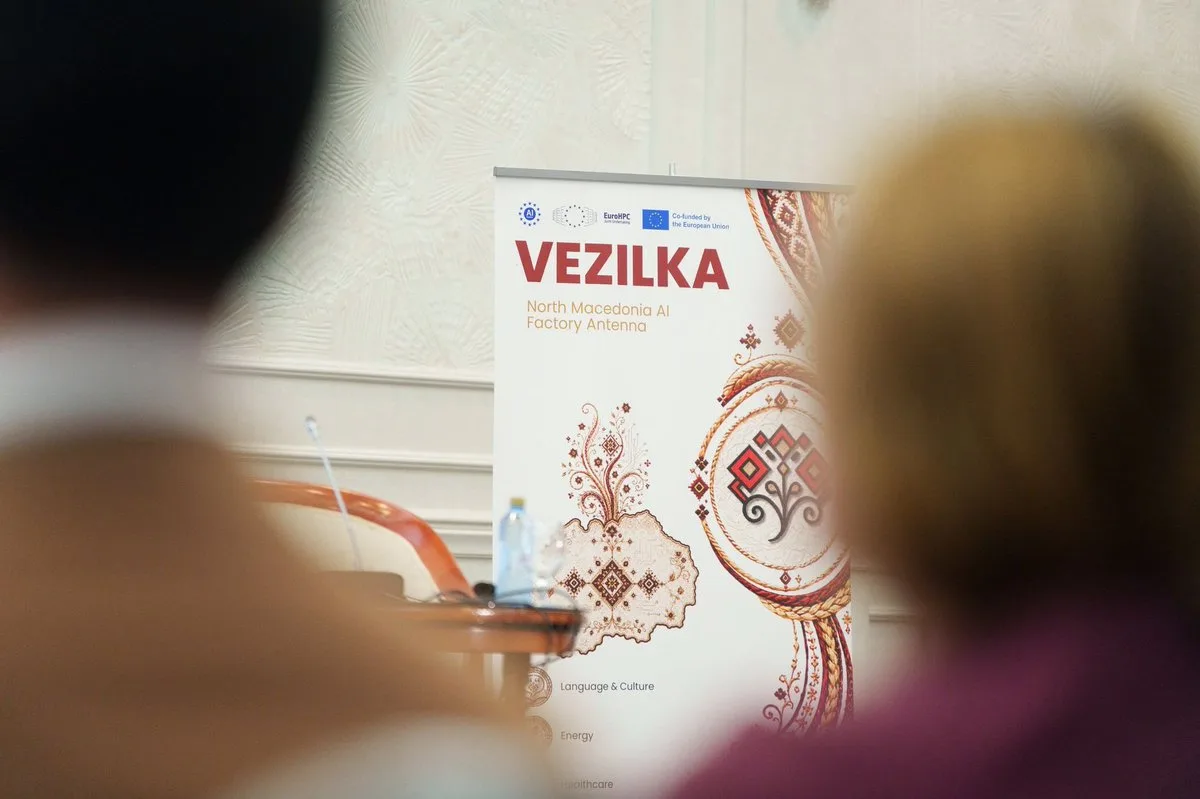
Secondary-school students across North Macedonia will be able to study artificial intelligence as a new elective subject from the 2026/27 school year, as the country begins bringing formal AI education into classrooms. The new subject, Introduction to Artificial Intelligence, consists of a 36-hour curriculum developed through the VEZILKA project in cooperation with the Bureau for Development of Education. The programme has now been officially included in the country’s secondary-education curriculum. Students will be introduced to the basic concepts behind artificial intelligence, but the subject goes beyond explaining how AI works. The curriculum also covers practical use of AI tools, prompting, fact-checking, AI-generated content and the safe, ethical and responsible use of artificial intelligence. That makes the programme one of the more concrete attempts in the Western Balkans to move AI literacy from occasional workshops and extracurricular activities into formal secondary education. Teachers are being prepared first Introducing a new subject also means preparing the people who will teach it. VEZILKA organised the first online training sessions for secondary-school teachers on September 2 and 3, bringing together educators from schools across North Macedonia. The organisation says it will continue supporting teachers as the programme is introduced and plans to develop additional educational resources around AI. That part of the rollout may prove just as important as the curriculum itself. Generative AI tools have entered classrooms much faster than formal education systems have been able to respond. Students already use systems such as ChatGPT, Gemini and other AI assistants for research, writing, translation and problem-solving, often without consistent guidance from schools. A formal subject gives schools an opportunity to deal with those questions directly rather than treating AI only as a technology students encounter outside the classroom. More than learning how to prompt The inclusion of fact-checking and responsible use is particularly relevant. Knowing how to generate an answer from an AI system is increasingly a basic digital skill. Knowing whether that answer is accurate is a different matter. Generative AI systems can produce incorrect information, fabricated sources and convincing content that lacks evidence. Students also face an online environment where AI-generated images, video and audio are becoming harder to distinguish from authentic material. Teaching AI literacy therefore involves more than showing students how to operate a tool. It requires understanding where AI systems can fail, how outputs should be verified, what information should not be shared with external platforms and where human judgement remains necessary. The new Macedonian curriculum appears designed around that broader interpretation of AI literacy rather than simply teaching students to use popular applications. Part of a wider VEZILKA education push The secondary-school programme is also part of a broader education and training programme being developed through VEZILKA, North Macedonia’s AI Factory Antenna initiative. VEZILKA is preparing AI courses for several groups, including educators, researchers, engineers, public-sector employees, sector professionals and citizens without a technical background. Its wider training programme begins in September 2026 and includes introductory AI-literacy courses as well as more specialised programmes. AI Balkans has previously reported on VEZILKA primarily through North Macedonia’s connection to Europe’s AI computing infrastructure and efforts to strengthen Macedonian-language AI. The introduction of a school subject represents a different part of the same strategy: developing people who can actually use and understand the technology. Infrastructure can give researchers and companies access to computing resources. Education determines how widely those capabilities can eventually be understood and applied. A regional question for education systems North Macedonia is not alone in trying to work out how AI belongs in education. Across the Balkans, schools and universities are increasingly being forced to make decisions about AI use, academic integrity, teacher training and digital literacy. Most of those responses remain fragmented. Some institutions are issuing guidelines. Others are training educators or experimenting with AI-supported teaching. Formal AI education at school level remains less common. North Macedonia’s new elective will therefore be worth watching beyond the country itself. The first practical test begins during the 2026/27 school year: how many schools offer the subject, how many students choose it and whether teachers receive enough support to turn the curriculum into meaningful classroom learning. For now, the country has taken a clear step beyond simply discussing the need for AI literacy. It has put it on the timetable.