North Macedonia wants its own AI infrastructure. The harder part starts after the launch
By Bojan Stojkovski ·
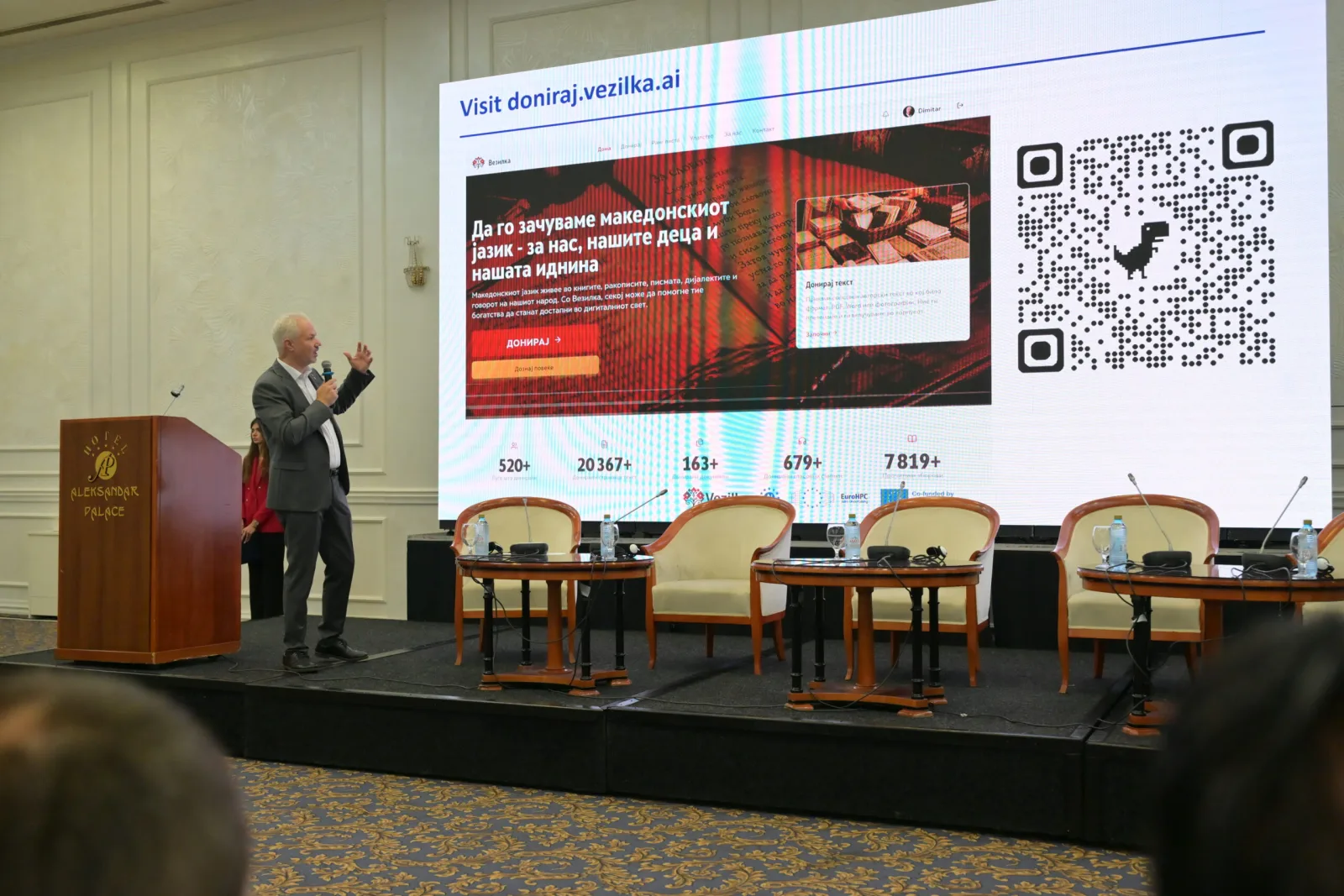
Last month we saw a rare moment when a technology initiative in North Macedonia was presented not just as another project, but as an attempt to build the foundations of an entire infrastructure layer. Vezilka is designed to become exactly that: a combination of a national artificial intelligence centre, a language technology platform, and a gateway into Europe’s growing supercomputing network. Vezilka’s European infrastructure ambitionsOn paper, the ambition behind the approximately €6 million project is clear. N. Macedonia is officially becoming part of the European network of AI Factory Antennas, opening access to infrastructure that has so far remained largely out of reach for the country’s research and industrial ecosystem. In practical terms, this means access to supercomputers, advanced data spaces, and resources for training and testing artificial intelligence models. But perhaps more importantly, it represents an attempt to solve a problem that has existed for years: ensuring that the Macedonian language is not just a marginal presence in global AI models, but a valuable data resource that can shape how those systems understand and process it. Led by the Faculty of Computer Science and Engineering (FINKI), together with several public institutions, Vezilka aims to create a high-quality Macedonian language corpus. The process involves digitising laws, academic papers, literature and other forms of written content that can later serve as a foundation for training local AI models. Macedonian language data challengesThis is also where the biggest technical challenge lies. The success of the project depends on whether N. Macedonia has enough structured and high-quality data to build models that do not simply “understand” the Macedonian language, but also understand the context in which it is used. At its core, Vezilka is trying to address two separate but connected gaps. The first is the lack of AI infrastructure and computing capacity. The second is a language and data gap - the limited amount of digitised Macedonian-language content available today, which directly affects the quality and performance of future AI systems. But this is where the more complicated part of the story begins. Even with European infrastructure and institutional support, the success of a project like this will depend on something far less tangible: the ability to continuously produce high-quality datasets, develop research talent, and, perhaps most importantly, transfer knowledge from academia into industry. From infrastructure to AI adoptionN. Macedonia already has a solid academic foundation, but its AI industry layer is still relatively small. The startup ecosystem is developing, while adoption of advanced AI models across the public and private sectors remains at an early stage. This creates a potential imbalance: the infrastructure could be built faster than the ecosystem capable of fully using it. That is the key question surrounding Vezilka. Will this infrastructure lead to real products, companies and services that use AI as a competitive advantage, or will it remain a well-designed but underutilised technology platform? The answer will not come from the launch of the project itself. It will come from what happens afterwards - whether researchers, startups, companies and institutions are able to turn access to infrastructure and data into something that creates lasting value.