AI Tech Summit Day One Keeps Humans in the Loop
By Suad Seferi ·
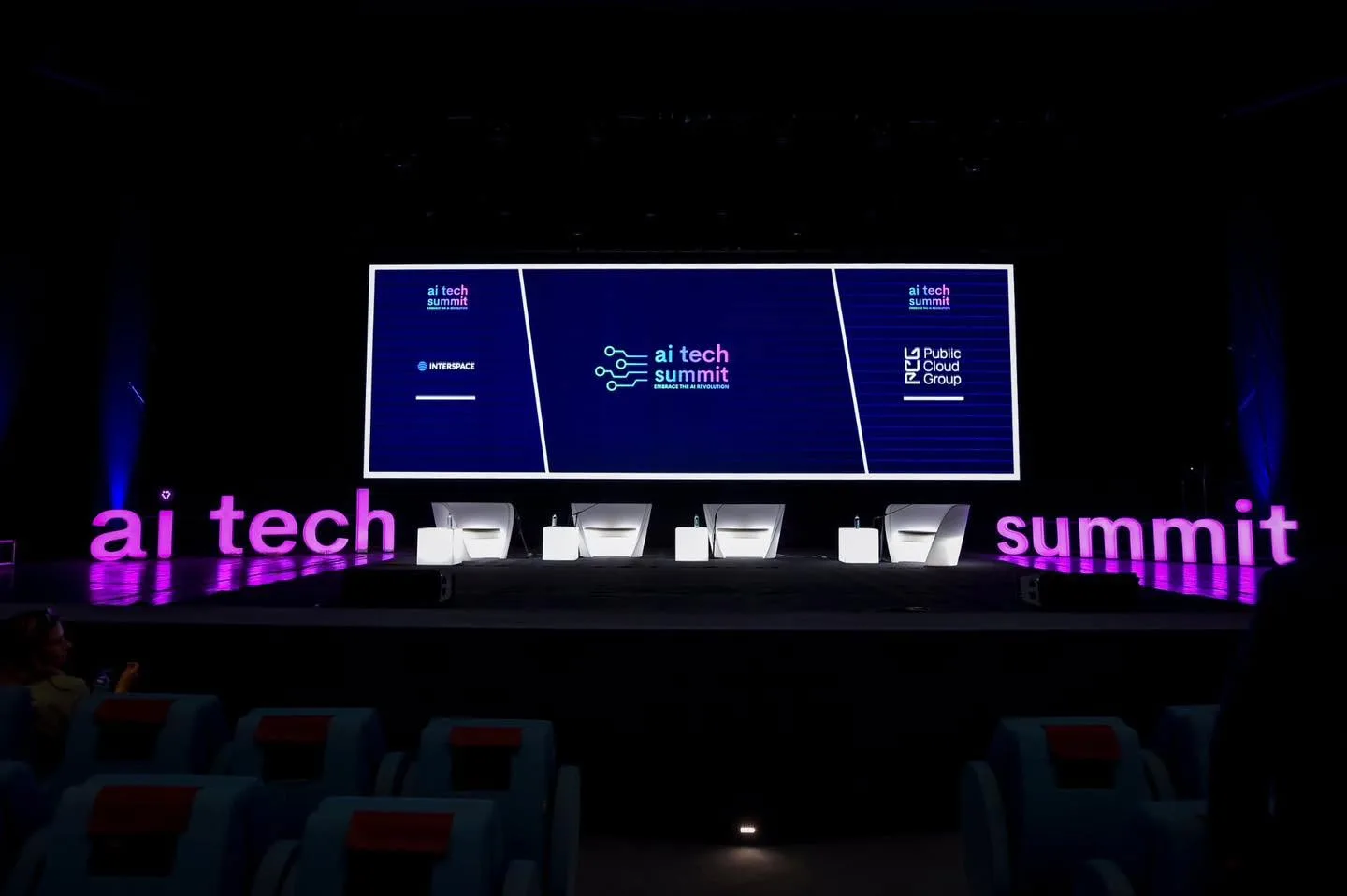
Human involvement remained one of the clearest themes running through the opening sessions of AI Tech Summit “Filip Avramchev” in Skopje on Tuesday, as speakers from Microsoft, NVIDIA and the autonomous-driving field discussed very different parts of the AI stack but repeatedly returned to the role of people in designing, supervising and using these systems. Summit opening and initial sessionsThe summit opened on September 22 at the National Opera and Ballet, with the first sessions moving from enterprise AI and infrastructure to autonomous systems and real-world applications. Fatos Ismali, Chief AI Architect at Microsoft UK, opened the programme with a discussion focused on enterprise AI and the challenge of moving artificial intelligence from experiments into real organisational use. A recurring point in that discussion was that introducing AI into a company is not simply a technical exercise. Organisations still need people who understand the process, evaluate the output and decide where AI should and should not be used. Enterprise AI and infrastructureThe same principle appeared from a different direction in the presentation by Koen van den Berg, AI Factory and Data Center Readiness Lead for EMEA at NVIDIA. Van den Berg focused on the infrastructure behind modern AI, including the growing importance of computing capacity, data centres and the systems needed to support increasingly demanding models. But even in a discussion centred on infrastructure, the wider message remained tied to people. AI systems may become more capable and more autonomous, but their usefulness still depends on how they are designed, deployed and governed by the organisations using them. That question became even more concrete when the programme moved into autonomous driving. Autonomous driving in the physical worldAtanasko Boris Mitrev, a self-driving car engineer and AI and robotics researcher associated with the Autoware Foundation, discussed how autonomous vehicles perceive and respond to the environment around them. Autonomous driving is often presented as one of the clearest examples of machines taking over tasks previously performed entirely by people. Yet the discussion again returned to human responsibility, especially around system design, testing, safety and the limits placed on automated decision-making. That overlap between the first sessions was notable. Microsoft approached AI from the perspective of organisations and production systems. NVIDIA looked at the infrastructure required to run increasingly capable models. Autonomous driving brought AI into the physical world, where decisions can have immediate consequences. Human responsibility in AI automationDespite those differences, the underlying message was similar: more automation does not automatically mean less human responsibility. If anything, the expansion of AI into more complex processes appears to be increasing the importance of human judgement, particularly when systems move from assisting people to taking actions on their behalf. That is also a relevant discussion for the Western Balkans, where companies and institutions are beginning to move beyond basic experimentation with generative AI and toward questions of integration, governance and accountability. The challenge is no longer only whether organisations can access powerful AI tools. It is whether they have the people, processes and oversight needed to use them responsibly and effectively. AI Tech Summit “Filip Avramchev” continues on September 23, with further sessions covering AI agents, software engineering, robotics, enterprise applications and other areas of applied artificial intelligence. AINOW Society is supporting this year’s edition as a community partner.