EU Leaders Meet in Dublin to Decide Europe's AI Future
By Suad Seferi ·
Key takeaways
- EU leaders are holding their first dedicated strategic AI discussion. The meeting in Dublin focuses on Europe's competitiveness, technological sovereignty and the societal implications of artificial intelligence.
- Investment and infrastructure are central priorities. Leaders will examine how Europe can reduce dependence on foreign AI providers, strengthen computing capacity and support European businesses.
- AI safety remains a major concern. Nobel laureate Geoffrey Hinton will contribute to discussions on fundamental rights, employment, cybersecurity and the risks of advanced AI systems.
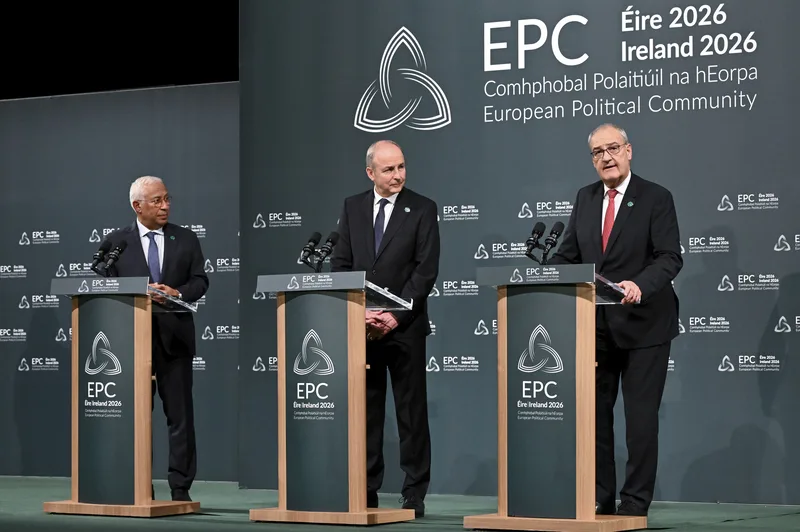
European Union leaders are gathering in Dublin for their first dedicated strategic discussion on artificial intelligence, with Europe's technological independence, investment in AI infrastructure and the risks posed by increasingly powerful systems at the centre of the agenda. The informal European Council meeting, hosted by Irish Prime Minister Micheál Martin on November 13, brings together the leaders of the EU's 27 member states. They are expected to examine how Europe can strengthen its position against the United States and China while maintaining safeguards for citizens, businesses and democratic institutions. European Council President António Costa called for the meeting, arguing that the pace of AI development requires a direct political discussion among European leaders. The talks will feature two influential voices from the AI industry and research community: Arthur Mensch, chief executive of French AI company Mistral, and Geoffrey Hinton, the Nobel Prize-winning researcher known for his contributions to modern artificial intelligence. Europe wants greater control over its AI future The first part of the discussions will focus on Europe's competitiveness and technological sovereignty. Although the EU has developed an extensive regulatory framework for artificial intelligence, much of the infrastructure powering advanced AI remains concentrated outside Europe. American technology companies dominate important parts of the global AI market, including cloud computing, advanced AI chips and commercial foundation models. This dependence has become a strategic concern for European policymakers, particularly as governments and businesses increasingly integrate AI into essential services and economic activities. According to the European Council's agenda, leaders will examine how to reduce dependencies across the AI supply chain, strengthen European capabilities and attract greater investment into computing infrastructure. Access to affordable energy will also feature prominently. Training and operating advanced AI systems requires substantial computing power, making electricity availability and infrastructure costs increasingly important to investment decisions. Mistral CEO Arthur Mensch is expected to contribute to this discussion, offering the perspective of a European company competing with much larger American and Chinese AI developers. Investment is becoming a political priority Europe's ambitions extend beyond developing its own AI models. The EU has already launched initiatives to expand computing capacity, support semiconductor manufacturing and encourage the adoption of artificial intelligence across industry and public administration. However, financing remains a major challenge. Reuters reports that plans for seven AI gigafactories have encountered difficulties linked to disagreements over funding priorities in the EU's next long-term budget. These facilities are intended to provide the computing infrastructure needed to develop and operate advanced AI systems. The Dublin discussions are expected to examine how public and private investment can support these ambitions and help European businesses compete internationally. For smaller European companies, the practical questions are particularly important: whether advanced computing resources will become more accessible, whether European AI providers can offer competitive alternatives and how businesses can adopt AI without becoming excessively dependent on a few large technology suppliers. Geoffrey Hinton brings AI safety into the discussion The second major session will address the societal consequences of artificial intelligence. Geoffrey Hinton, who received the 2024 Nobel Prize in Physics for foundational contributions to machine learning, is expected to discuss the risks associated with increasingly capable AI systems. The agenda includes the protection of fundamental rights, children's safety, democratic processes, employment and cybersecurity. European leaders will also consider market concentration and the implications of having advanced AI capabilities controlled by a relatively small number of companies. Hinton has repeatedly warned about the potential dangers of advanced AI, including difficulties controlling increasingly autonomous systems. His participation brings a different perspective to the meeting, contrasting the economic opportunities discussed in the first session with questions about safety, accountability and public trust. The EU faces the challenge of encouraging technological development while ensuring that AI systems operate within acceptable legal and ethical boundaries. The meeting is not expected to adopt new legislation, but its discussions could influence future priorities for European AI policy and international cooperation. What does this mean for the Western Balkans? Although the Western Balkan countries are not represented among the EU's 27 member states, decisions about Europe's AI direction remain relevant to the region. Businesses across the Western Balkans rely heavily on European markets, technology providers and digital infrastructure. Changes in European AI investment priorities could influence opportunities for regional technology companies, research institutions and startups seeking partnerships with EU organizations. The EU's approach to AI governance also matters for countries pursuing closer regulatory alignment with European standards. However, the Dublin meeting does not itself introduce new obligations for Western Balkan businesses or governments. Its immediate importance lies in the longer-term political direction that European leaders may establish for AI development, investment and security. A discussion that could shape Europe's next steps The Dublin gathering is an informal European Council meeting, meaning leaders are not expected to adopt binding legislation or formal policy conclusions. The discussions are intended to establish a common political understanding of Europ…
Frequently asked questions
Why are EU leaders meeting in Dublin to discuss AI?
The European Council wants to establish common strategic priorities for artificial intelligence, including strengthening Europe's competitiveness, investing in infrastructure and addressing safety concerns.
Who is participating in the AI discussions?
The meeting brings together the leaders of the EU's 27 member states. Mistral AI CEO Arthur Mensch and Nobel Prize-winning AI researcher Geoffrey Hinton are invited contributors.
Will the EU announce new AI regulations?
No new legislation is expected from this informal meeting. The discussions are intended to guide future European AI priorities rather than produce binding decisions.
What does the meeting mean for the Western Balkans?
Future European AI investment and regulatory decisions could affect regional businesses, research institutions and technology partnerships. The Dublin meeting itself does not establish new requirements for Western Balkan countries.