AI Summaries Can Change What People Remember
By Suad Seferi ·
Key takeaways
- Participants exposed to an accurate AI summary correctly recalled a key detail 83.6% of the time, compared with 44.8% after reading a misleading summary.
- AI-generated summaries in the study omitted an average of 51.6% of central details from the tested video material.
- Knowing that a summary was generated by AI did not prevent misleading information from affecting participants' memories.
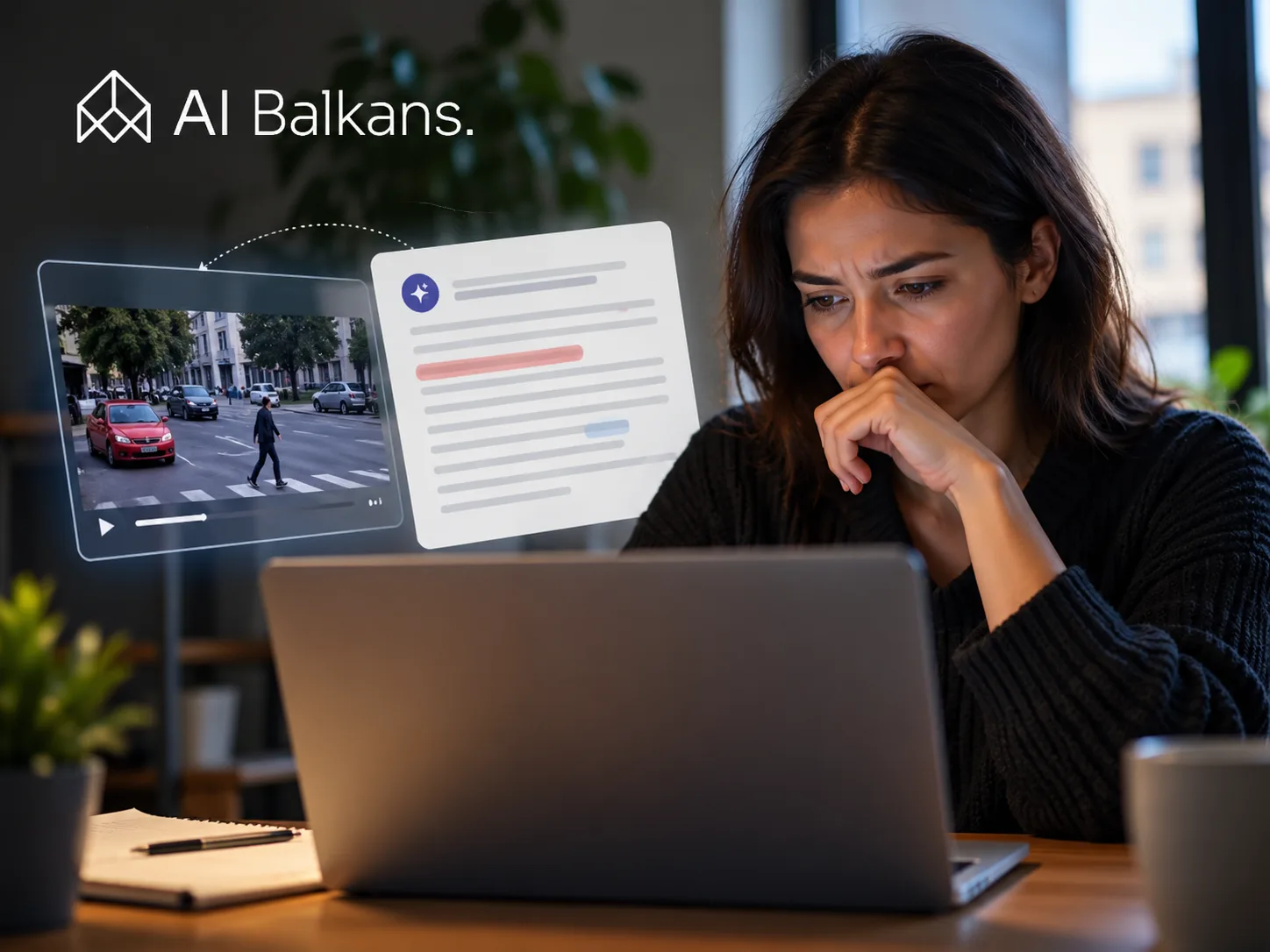
AI-generated summaries containing incorrect information can alter what people later remember about an event, according to new research from Georgetown University and the University of Washington. The study examined what happens when people first witness an event and later encounter an AI-generated description of it containing misleading information. The difference was substantial. Participants who received an accurate summary later identified a key detail correctly 83.6% of the time. Among those who received a misleading summary, accuracy fell to 44.8%. Researchers also found that knowing the summary had been produced by artificial intelligence did not prevent the effect. The findings raise questions about the growing use of AI to summarise meetings, videos, documents and other information, particularly in situations where those summaries may later become the main version of an event that people remember. AI summaries frequently left out important information Before testing human memory, researchers examined summaries generated by ChatGPT and Gemini from videos. The systems did not simply produce occasional factual mistakes. Across the tested prompts and models, the summaries omitted an average of 51.6% of central details from an animated video showing a traffic accident. In 95% of the summaries, the models failed to mention what researchers considered the most important event in the video: a car colliding with a pedestrian. The researchers also identified cases where AI systems misconstrued information or introduced details that were not present. The second part of the research investigated whether these errors could influence human memory. A total of 331 participants completed the experiment. They first watched an animated video showing a red car approaching an intersection. Depending on the version, the intersection contained either a stop sign or a yield sign. The car then turned and collided with a pedestrian. Between 24 and 48 hours later, participants received a written summary of what they had seen. Some received an accurate version. Others received a summary containing misleading information about the traffic sign. Researchers then tested what participants remembered from the original video. Those exposed to the misleading summary were significantly more likely to remember the incorrect information rather than what they had actually seen. Knowing that AI wrote it was not enough One of the more important findings concerns how people respond when they know AI is involved. Before reading the summary, participants were told that it had either been produced by an AI system or written by a human transcriber. That warning did not significantly change the effect. People remained susceptible to incorrect information even when they believed they were reading AI-generated text. Their familiarity with AI and their level of trust in the technology also did not appear to protect them from the misleading information. The study therefore challenges a common assumption surrounding the use of AI systems: that keeping a human involved is enough to catch mistakes. In some situations, the researchers argue, the AI output itself may influence the person who is supposed to check it. If someone reads an inaccurate summary after witnessing an event, their own memory of that event may already begin to change. Why this matters beyond chatbots AI-generated summaries are increasingly appearing in workplace meetings, search results, documents and video analysis. The researchers are particularly concerned about high-stakes applications. One example is policing. AI tools are already being developed and deployed to process video and other large volumes of information. A generated summary could eventually influence how officers, investigators or other people remember an incident they originally witnessed. Healthcare and other areas where accurate recollection matters could present similar risks. The researchers did not test real police body-camera footage in this study. The experiment used controlled animated videos, allowing the team to measure the effect of specific pieces of misinformation. That limitation is important. The findings do not show that every inaccurate AI summary will create a false memory, nor do they establish how strong the effect would be in real-world situations. The researchers now want to study those environments more directly, including what happens when AI systems summarise actual body-camera footage. The study, titled AI-Enabled Human Memory Manipulation: Misleading AI-Generated Summaries Distort Human Memory, was authored by Mattea Sim, Yael Eiger and Tadayoshi Kohno. It is scheduled to be presented at the Ninth AAAI/ACM Conference on AI, Ethics and Society in October 2026. As AI summarisation becomes a routine layer between people and original information, the issue may no longer be limited to whether an AI-generated summary is correct. The more difficult question is what happens after people read one that isn't.
Frequently asked questions
Who conducted the research?
Researchers from Georgetown University and the University of Washington conducted the study.
How many people participated?
A total of 331 participants completed both stages of the human-memory experiment.
Which AI systems were tested?
Researchers analysed summaries generated using OpenAI's ChatGPT and Google's Gemini.
Does the study prove that AI always creates false memories?
No. The study used a controlled experiment involving animated videos and deliberately misleading summaries. The researchers say further work is needed to understand how the effect operates in real-world settings.