Slovenia Deepens AI Ties With US Through New Technology Partnership
By Suad Seferi ·
Key takeaways
- Slovenia signed the AI Opportunity Partnership with the United States on 24 September 2026.
- The partnership covers AI, semiconductors, energy, computing infrastructure and secure technology supply chains.
- Slovenia has not joined Pax Silica yet; the government describes the agreement as an initial step toward possible participation
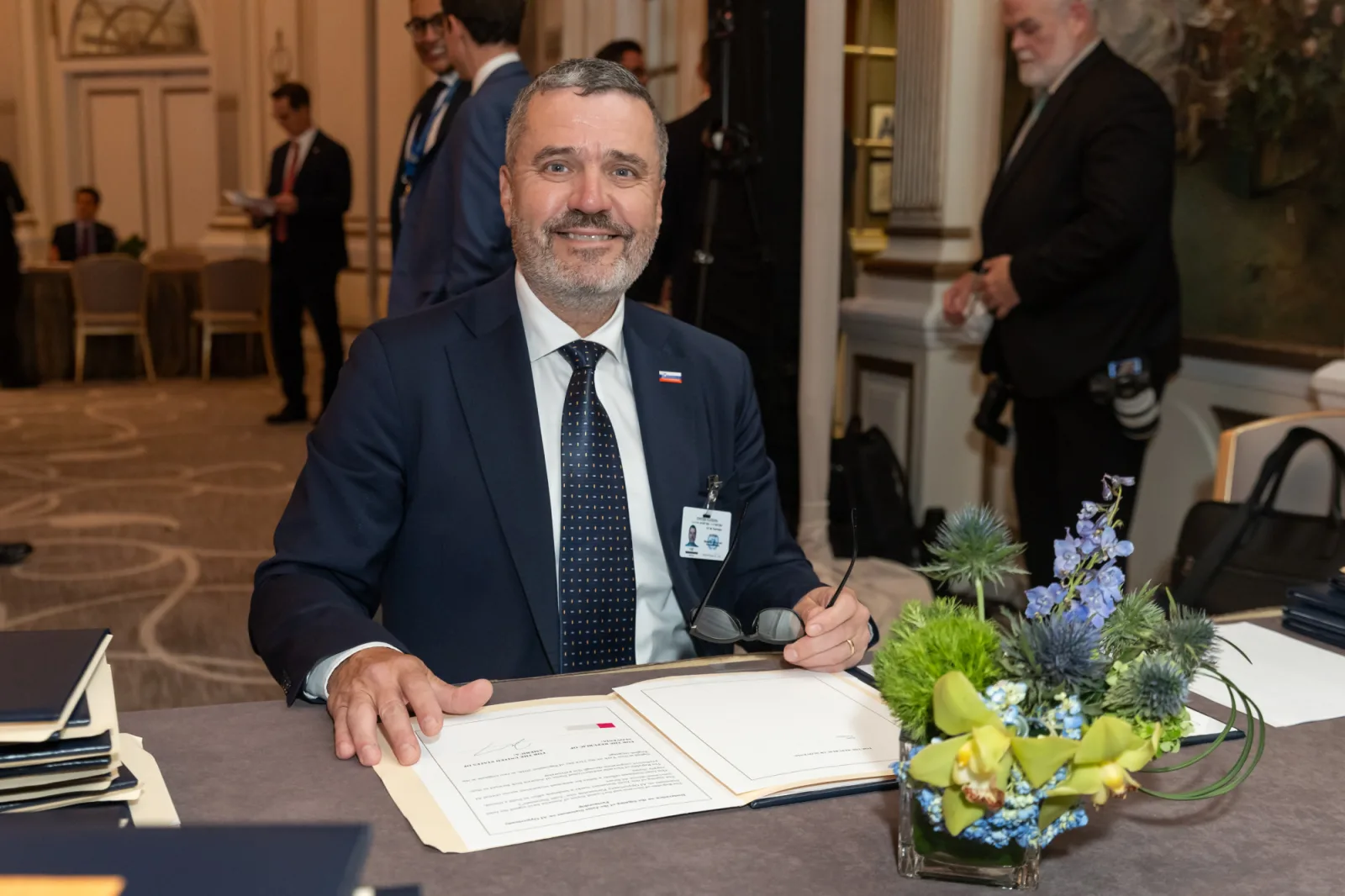
Slovenia has signed a new artificial intelligence partnership with the United States, expanding cooperation into semiconductors, computing infrastructure, energy and secure technology supply chains. Minister Kajzer Signs Joint Statement Foreign and European Affairs Minister Tone Kajzer signed the Joint Statement on AI Opportunity Partnership in New York on September 24, following an invitation from the United States. The Slovenian government said the agreement is linked to the broader US-led Pax Silica initiative. The partnership is intended to deepen cooperation in the development and use of artificial intelligence, particularly in economic and technological areas. According to the Slovenian government, the agreement covers innovation, resilient supply chains, private-sector cooperation and access to resources considered increasingly important for AI development, including semiconductors, energy and computing infrastructure. Kajzer said Slovenia wants closer cooperation with trusted partners across AI, semiconductor supply chains, critical minerals and technological innovation. He also pointed to potential opportunities for Slovenian companies and researchers as investment in AI infrastructure expands on both sides of the Atlantic. The agreement does not mean Slovenia has formally joined Pax Silica. Ljubljana described the signing as an initial step toward possible participation in the initiative. What is Pax Silica? The United States launched Pax Silica in December 2025 as an international framework focused on securing the supply chains behind artificial intelligence and advanced computing. The initiative covers areas including semiconductors and critical minerals, both of which have become strategically important as governments compete to expand AI and data-centre infrastructure. The White House said earlier this year that Japan, the United Kingdom, Australia, Israel, Singapore, South Korea, the United Arab Emirates and Qatar had signed the Pax Silica declaration. The initiative reflects a broader shift in AI policy away from models and software alone. Governments are increasingly treating access to chips, energy, data centres, minerals and manufacturing capacity as part of their national AI strategies. Pax Silica has also started appearing in wider US technology policy. A June executive order on quantum technologies instructed US agencies to consider how existing international partnerships, including Pax Silica, could support cooperation with allied countries. Slovenia looks for a larger role in the AI supply chain For Slovenia, the partnership could provide another route into international projects around AI infrastructure and advanced technologies. The government said its objective is for countries such as Slovenia to participate in the emerging transatlantic AI ecosystem rather than operate only as users of technologies developed elsewhere. That distinction matters for smaller European economies. Much of Europe's AI debate has focused on regulation and adoption, while the infrastructure required to build and operate advanced AI systems remains concentrated among a relatively small number of countries and technology companies. Closer cooperation around computing capacity, semiconductors and investment could therefore become increasingly important for smaller EU member states seeking a place in the AI value chain. Slovenia already cooperates with the United States on science, technology and cybersecurity. Previous bilateral talks have included artificial intelligence, advanced technologies and cooperation through the Western Balkans Cyber Capacity Centre. The new AI partnership extends that relationship into the infrastructure and supply-chain questions now shaping international technology policy. The next step will be whether the agreement leads to Slovenia formally joining Pax Silica and, more importantly, whether cooperation produces concrete investment, research projects or access to computing and semiconductor infrastructure.
Frequently asked questions
What is Pax Silica?
Pax Silica is a US-led initiative launched in December 2025 to strengthen cooperation among trusted partners in AI and global technology supply chains, including semiconductors and critical infrastructure.
Has Slovenia joined Pax Silica?
No. Slovenia says the AI Opportunity Partnership is an initial step toward potentially joining Pax Silica in the future.
What does the Slovenia-US AI partnership cover?
It covers AI development and adoption, secure supply chains, semiconductors, critical minerals, energy, computing infrastructure, innovation and private-sector cooperation.
Why does the agreement matter for Slovenia?
The agreement is intended to give Slovenian companies and researchers greater opportunities for cooperation and investment within the emerging transatlantic AI ecosystem.