Hack for Humanity Comes to Skopje
By Guest Contributor ·
Key takeaways
- Ten teams developed AI prototypes around local challenges during Hack for Humanity: Skopje.
- The winning project focused on mapping wildfires and nearby water supplies, while the second-place team worked on parking availability in Skopje.
- The hackathon ran alongside a DevDay Exchange Community session where participants worked hands-on with OpenAI Codex.
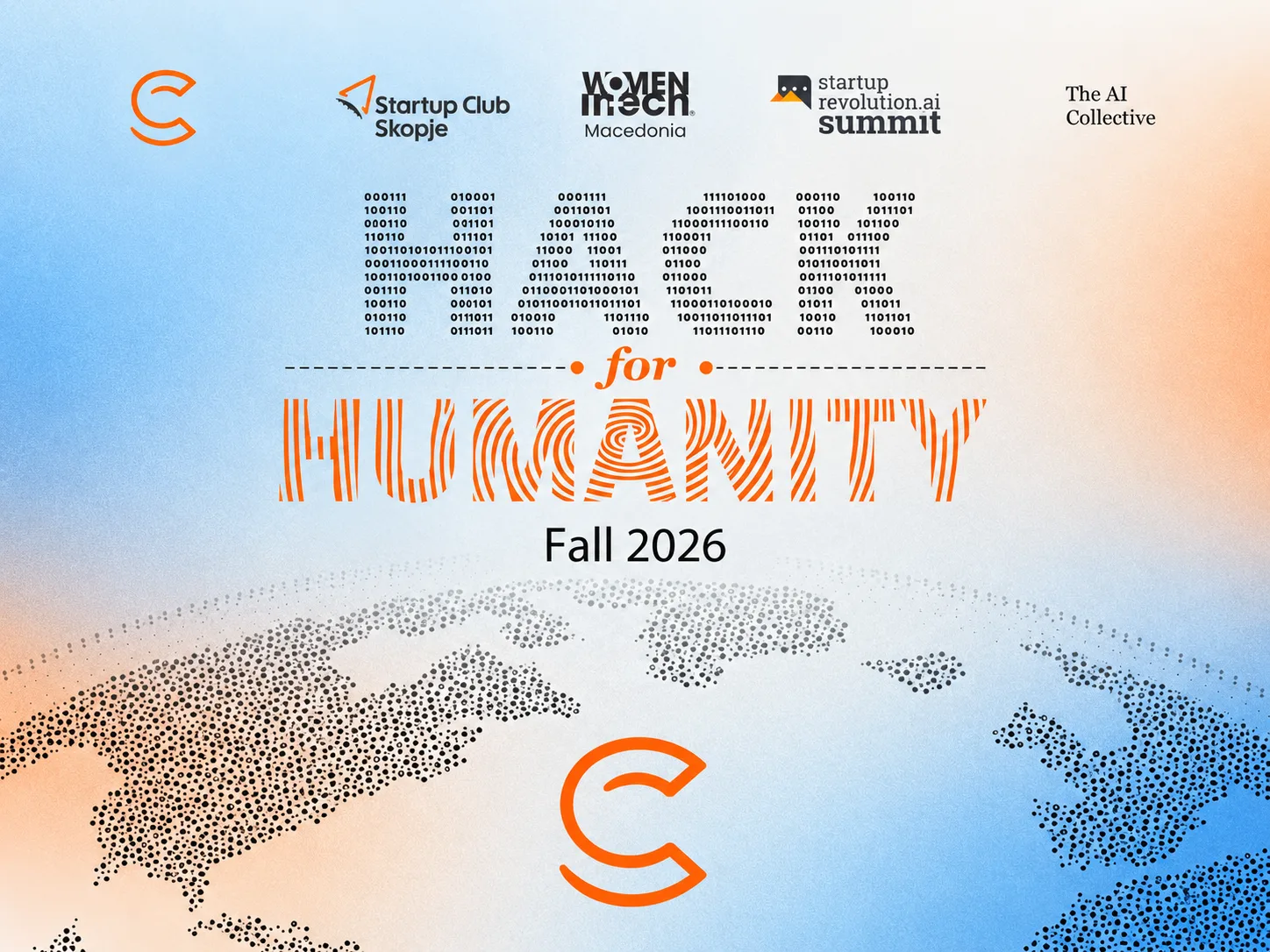
Ten teams developed AI prototypes for wildfire response, parking, air pollution and other local challenges during Hack for Humanity: Skopje, held on October 3 as part of Startup Revolution AI Summit 2026. The event brought developers, students, founders, designers and other participants together for a short build session centred on problems affecting their own communities. Hack for Humanity is a global initiative by The AI Collective that encourages local communities to identify challenges around them and use artificial intelligence and software to explore practical solutions. The wider initiative connects 130 AI Collective chapters across 50 countries. The Skopje edition was organised through AI Collective Skopje, with Monika Rizovska Tanevska involved in leading the local event. INOVA and Women in Tech Macedonia also supported the initiative. The idea behind the format is straightforward: people who understand a problem closely should have an opportunity to participate in building its solution. Ten teams, three hours to build The programme started at 16:00 with a short briefing on the challenges. Participants then had around three hours to work in teams, develop their ideas and create prototypes before presenting them to the judging panel. The hackathon was designed to be open beyond experienced programmers. Developers, designers, entrepreneurs, students, researchers, professionals and participants with ideas for local problems could take part. No previous hackathon experience or finished project was required. By the end of the session, 10 teams had presented their work. The projects were evaluated by Prof. Dr. Vladimir Trajkovikj and Suad Seferi. Wildfire response project takes first place The winning team focused on one of North Macedonia's recurring environmental challenges: wildfires. The team developed an interactive mapping concept designed to locate fires across the country while also identifying nearby water supplies that could potentially support firefighting operations. The idea connected two important pieces of information in one interface: where a fire is located and where available water resources can be found nearby. The project took first place at the Skopje hackathon. Finding parking in Skopje The second-place team focused on a very different problem, but one familiar to drivers across the capital. Their project was designed to help users identify available parking spaces in Skopje and understand where parking is free or requires payment. The concept aimed to bring parking availability and payment information together, giving drivers a clearer picture of their options before reaching a destination. Two ecology projects encouraged to join forces Two teams independently arrived at similar ideas around air pollution and outdoor activity. Their projects explored how environmental and air-quality information could help people understand current pollution conditions and decide when it may be more suitable to go outside, exercise or run. Rather than selecting one of the two similar concepts, the judges encouraged the teams to collaborate and combine their work. The two teams were jointly recognised in third place. Codex becomes part of the build Hack for Humanity also overlapped with DevDay Exchange Community: Skopje, a hands-on Codex workshop held during Startup Revolution AI Summit. The session took place from 16:30 to 17:30 at INOVA and was hosted by Berat Kjamili, an OpenAI Codex Ambassador, together with Ana Sekulovska and the AI Collective community. It brought together developers, students, founders and other builders for a live Codex demonstration, discussion around ideas and announcements from OpenAI's DevDay, and hands-on work with the coding tool. Monika Rizovska Tanevska, organiser of Hack for Humanity Skopje, and Darko Janevski, an AI-focused entrepreneur and consultant, were listed among the supporters of the DevDay Exchange session. Hackathon teams were also provided with $150 in Codex credits per team, giving them access to AI-assisted development tools during the build. For teams working under a tight deadline, that meant Codex could be used to help move from an initial idea toward a demonstrable prototype within a few hours. The DevDay Exchange was a community-led event and not an official OpenAI event. Who judged the projects? The judging panel combined academic experience in computer science with work around the practical adoption of artificial intelligence. Prof. Dr. Vladimir Trajkovikj is a professor at the Faculty of Computer Science and Engineering at Ss. Cyril and Methodius University in Skopje. His academic and research work covers computer science, digital technologies and applied research, including participation in numerous international projects. Suad Seferi is an AI strategist and educator, and founder and president of AINOW Society, a North Macedonia-based organisation working on AI literacy, education, research and responsible adoption. His work also covers AI strategy, organisational readiness, digital transformation and the practical implementation of AI. The teams were assessed after presenting what they had managed to develop during the limited hackathon period and explaining the problem their projects were designed to address. From conversation to building Hack for Humanity followed Humans in AI Week, an earlier AI Collective initiative in which communities discussed what it means to be human as artificial intelligence becomes more widely used. The hackathon shifted the focus from discussion to building. That was visible in Skopje. The leading projects did not begin with a general AI product and then search for a use case. They started with specific problems: wildfires, access to water during emergencies, parking and polluted air. The event also showed how quickly current AI development tools can change the format of a hackathon. With access to tools such as Codex, teams could spend more of their limited time testing an idea and assembling…
Frequently asked questions
What is Hack for Humanity?
Hack for Humanity is a global initiative by The AI Collective that encourages local communities to identify problems around them and build AI-supported solutions.
How many teams participated in Skopje?
Ten teams developed and presented projects during the Skopje edition.
Who organised Hack for Humanity Skopje?
The event was organised through AI Collective Skopje, with Monika Rizovska Tanevska involved in leading the local edition and support from INOVA and Women in Tech Macedonia.
Who judged the projects?
The projects were judged by Prof. Dr. Vladimir Trajkovikj and Suad Seferi.
Was OpenAI involved in the Skopje event?
The Codex workshop was hosted by Berat Kjamili, who is officially listed by OpenAI as a Codex Ambassador. The session was part of OpenAI’s wider developer community programme, but the Skopje event itself was community-led rather than an official OpenAI event.