AI Literacy for Young People Cannot Remain a One-Off Initiative
By Suad Seferi ·
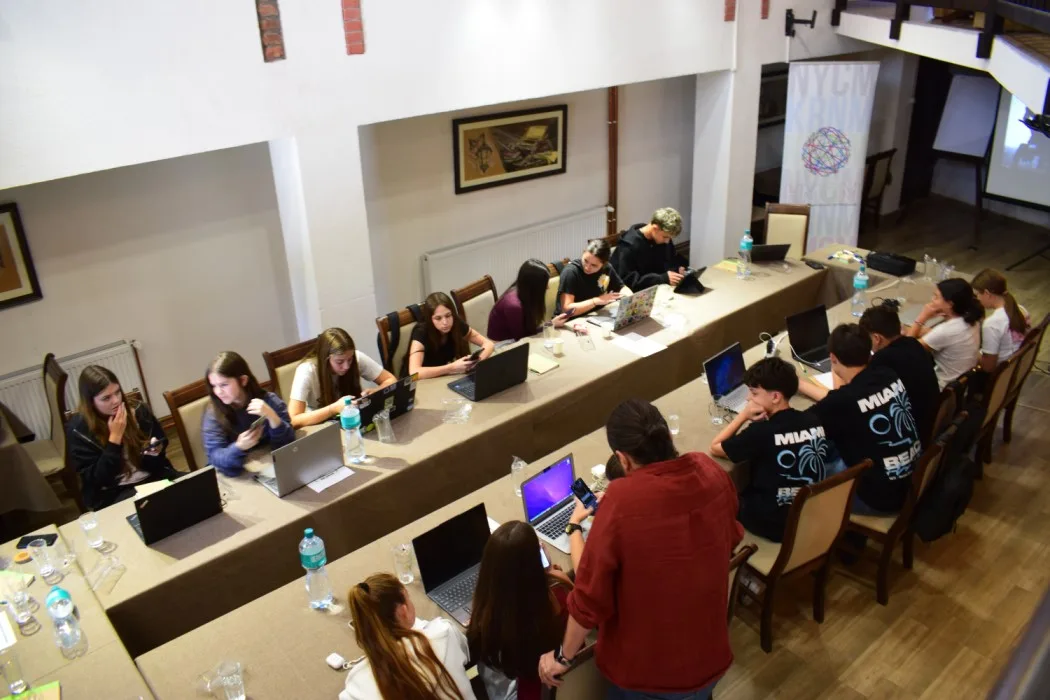
A four-day summer school in Berovo offered a strong example of what artificial intelligence education for young people can look like when it moves beyond tools and prompting. The Civic Agency in AI Summer School, held from July 25 to 28, was organized by Open Society Foundations – Western Balkans as part of the Green Generation initiative, with local coordination by the National Youth Council of Macedonia. The program brought together secondary school students from Štip and combined technical foundations with the wider social questions surrounding artificial intelligence. The training was delivered across two connected modules by Ivica Peshovski and Suad Seferi from AINOW Society. What became clear during the program was that young people do not need to be convinced that AI matters. They already use chatbots, content-generation tools, recommendation systems and digital platforms shaped by algorithms. The greater challenge is helping them understand when those systems are useful, when they may be misleading and what responsibilities remain with the people and institutions using them. The students explored misinformation, deepfakes, personal data, cybersecurity, bias, human rights and accountability. Through practical exercises and team activities, they were encouraged to examine AI critically rather than accept its outputs automatically. Their engagement showed that these subjects are not too complex for secondary school students. When the discussion is connected to the platforms they use, the content they encounter and the choices they make online, young people are ready to participate seriously. That matters because AI literacy is still too often reduced to technical skills. Many educational activities focus on how to write prompts, generate text, create images or improve productivity. These skills have value, but they do not prepare students for the wider influence of AI on society. Young people also need to understand that an AI system can produce a confident but incorrect answer, that algorithms can shape attention and behaviour, and that automated decisions are still the result of human choices. Programs such as the Civic Agency in AI Summer School should therefore not remain isolated events. Schools, civil society organizations and public institutions across the Western Balkans need more regular formats where students can learn about artificial intelligence in a structured and responsible way. These initiatives should not be limited to students already interested in technology or planning careers in computer science. AI affects future doctors, journalists, teachers, public servants, designers and citizens just as much as it affects developers. The Berovo program demonstrated the value of combining technical understanding with discussions about social responsibility. It also showed why investment in young people must include more than access to technology. Students need guidance, informed educators and spaces where they can question the systems becoming part of their education and everyday lives. The next step should be to make this type of learning more frequent, available in more schools and supported beyond a single summer program. Young people are already growing up with artificial intelligence. The responsibility now lies with institutions to ensure they also grow up understanding it.