Serbia Joins China-Led Global AI Organization
By Suad Seferi ·
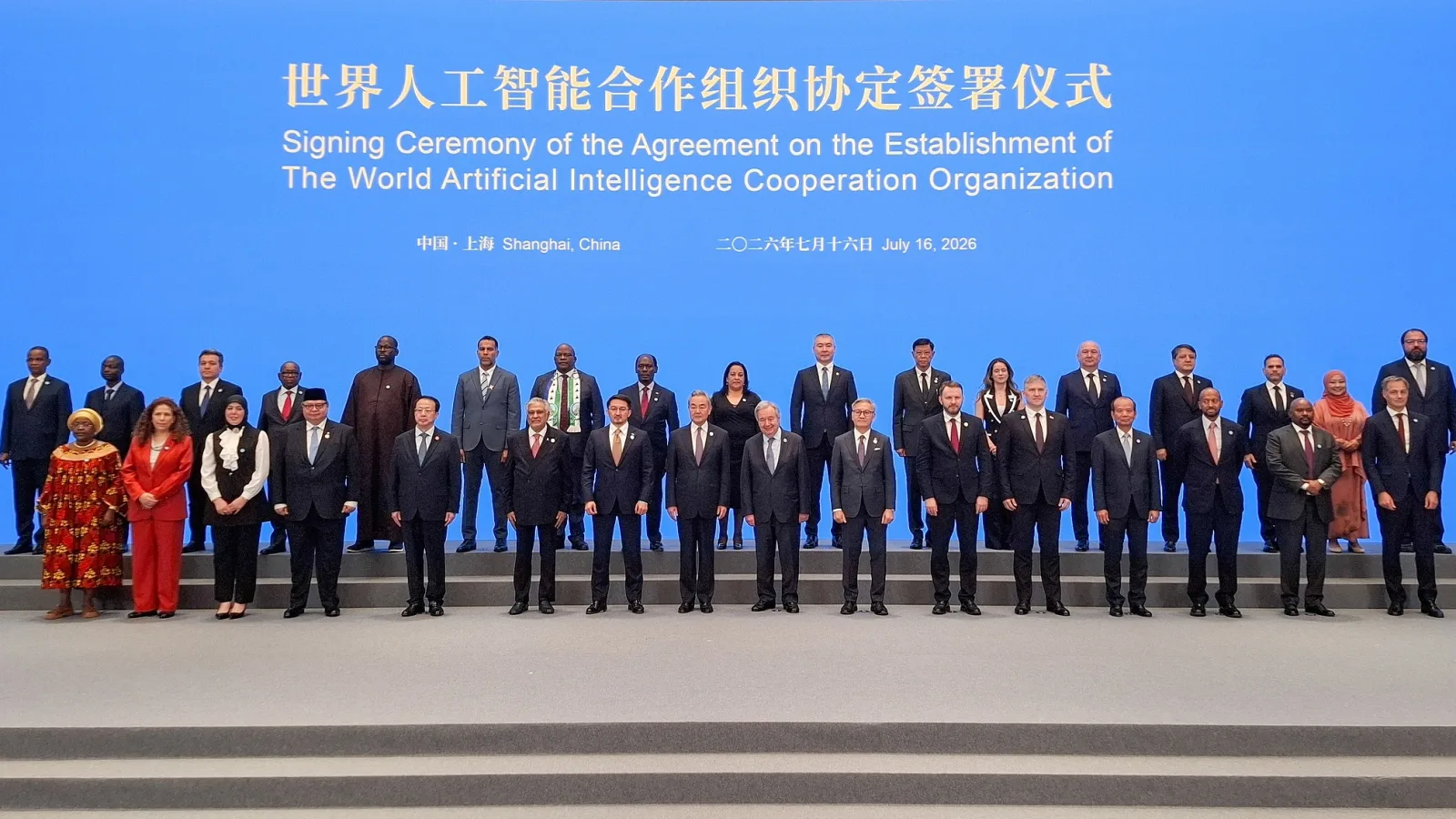
Serbia has joined 28 other countries in establishing a new intergovernmental organization for artificial intelligence, placing Belgrade among the founding members of a China-backed initiative that wants a larger role in global AI governance. The agreement establishing the World Artificial Intelligence Cooperation Organization, known as WAICO, was signed in Shanghai on July 16. The organization will be headquartered in the Chinese city and will operate as an independent international body focused on cooperation around the development and governance of AI. China’s Foreign Minister Wang Yi signed the agreement on behalf of Beijing. Other founding members include Russia, Belarus, Brazil, Cuba, Venezuela and Pakistan, alongside countries from Africa and Asia. Chinese Foreign Minister Wang Yi Serbia is the only Western Balkan country reported among the 29 founding members. Serbia approves participation and cooperationThe Serbian government had approved the country’s participation in June, when it adopted the basis for negotiating and signing the founding agreement. At the time, the government said membership would support scientific and technological cooperation, knowledge exchange and joint research and innovation projects. The formal signing now places Serbia inside an organization that China is presenting as a new platform for countries seeking a greater voice in how artificial intelligence is developed and regulated. According to the official Chinese government announcement, WAICO will promote cooperation on AI innovation, safety and governance while working to make the technology more accessible to developing countries. The organization also intends to address the uneven distribution of computing infrastructure, data, technical knowledge and other resources that have left much of the Global South dependent on a small number of technology companies and countries. Membership will remain open to other states. Global governance ambitions and implicationsThe initiative was announced around the opening of the World Artificial Intelligence Conference in Shanghai, where Chinese President Xi Jinping called for a global system of AI governance based on wider participation and greater access to the technology. China’s message is that AI rules should not be determined only by a small group of wealthy countries or private companies. At the same time, the creation of a new organization headquartered in Shanghai gives Beijing an opportunity to shape international AI policy around its own strategic interests. For Serbia, joining WAICO adds another layer to an already complex foreign and technology policy. Serbia balances competing AI approachesThe country is a candidate for European Union membership and is expected to bring its legislation closer to the EU AI Act, which establishes risk-based rules for artificial intelligence. Serbia has also developed close technological and economic relationships with China, including cooperation in digital infrastructure, surveillance technology, innovation and scientific research. Those relationships are not necessarily incompatible. WAICO has not been presented as a regulatory body with binding rules comparable to the EU AI Act, and its detailed powers, funding arrangements and decision-making structures are not yet clear. Still, Serbia’s role as a founding member raises questions about how it will navigate different approaches to AI governance. The European Union has built its policy around regulation, fundamental rights and legal accountability. China is placing greater emphasis on state-led development, international cooperation and access for developing economies. The United States continues to rely more heavily on industry-led innovation, national security restrictions and selective federal oversight. Serbia now has a formal place inside one of those emerging international initiatives while continuing to pursue EU membership. Potential gains and unresolved questionsThat position could give Belgrade access to new research partnerships, training programmes and AI infrastructure. It could also allow Serbia to represent the interests of smaller and developing countries in discussions that are often dominated by the world’s largest economies. The value of membership will depend on what WAICO becomes in practice. The organization has been formally established, but little has been disclosed about how it will operate, what commitments members have accepted or whether it will produce standards, finance projects or coordinate national policies. It is also unclear how much influence smaller members will have compared with China and the organization’s other larger founding states. Serbia’s national AI strategySerbia has spent several years presenting itself as a regional leader in artificial intelligence. It adopted its first national AI strategy in 2019, established an AI research institute and has invested in national computing infrastructure and public-sector applications. Joining WAICO gives that strategy an international dimension, but it also places Serbia within a wider contest over who will shape the rules and institutions governing AI. The next indication of the organization’s direction will come when its membership structure, leadership and first programmes are announced. Until then, Serbia’s decision is politically significant, even if the practical benefits remain undefined.