Belgrade Puts Clinical AI in Focus at MIND2026
By Suad Seferi ·
Key takeaways
- MIND2026 took place in Belgrade from 25–27 September 2026, focusing on practical AI applications in medicine.
- Sessions covered AI in radiology, cardiology, pathology, neurology, pharmacology, oncology and other clinical areas.
- - The congress also examined Serbia's future role in clinical AI and the challenges of moving AI from experimentation into healthcare practice. MIND2026
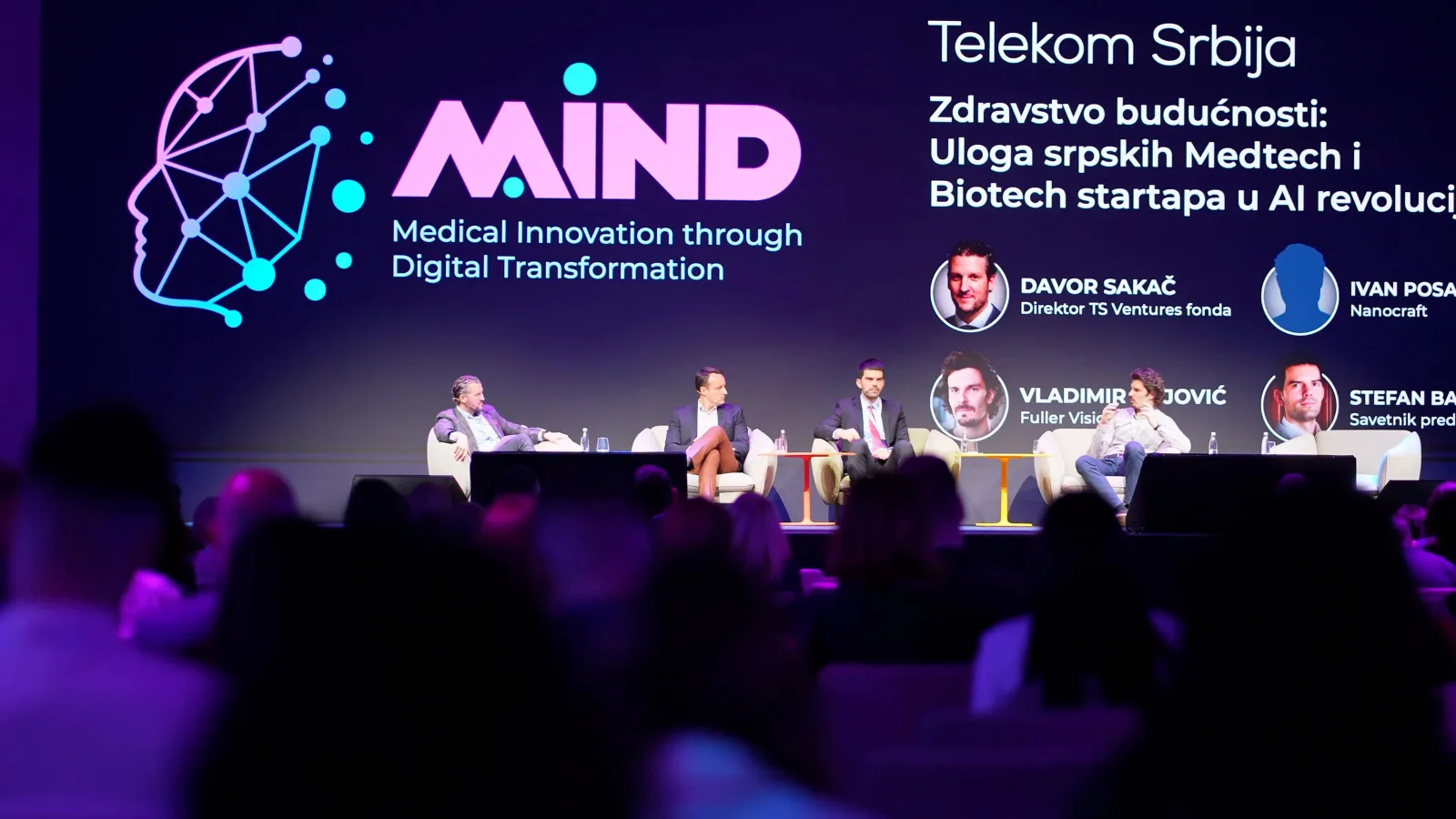
Belgrade has hosted a three-day congress focused on how artificial intelligence is moving into clinical medicine, bringing doctors, researchers, healthcare institutions and technology specialists together at the Sava Center from September 25 to 27. MIND2026, short for Medical Innovation through Digital Transformation, was built around a practical question: where is AI already useful in medicine, and what is still needed before it can become part of routine healthcare. Rather than treating AI as a single technology, the programme covered its use across radiology, cardiology, urology, pathology, neurology, ophthalmology, pulmonology, pharmacology and medical education. The congress also looked at broader questions around clinical decision-making, ethics, digital health infrastructure and the role doctors will retain as AI systems become more capable. Among the featured international speakers were Daniel Kraft, founder and chair of NextMed Health, and Bertalan Meskó, director of The Medical Futurist Institute. Kraft led a session on the digitally enabled future of medicine, while Meskó presented on how AI could influence medical practice over the next decade. From medical imaging to cardiac monitoring Much of the programme focused on areas where AI is already being tested or introduced into clinical workflows. Radiology sessions examined AI-assisted cancer imaging and pulmonoradiology, while cardiology discussions covered risk assessment for ischemic heart disease, cardiovascular imaging, remote rhythm monitoring and the use of AI in assessing the risk of sudden cardiac death. Other sessions examined AI applications in prostate diagnostics, urodynamics and kidney stone treatment, as well as its potential use in gastroenterology and surgery. The final day moved further into questions around implementation. Topics included AI-assisted drug discovery, stroke diagnosis, intensive care, digital pathology, lung cancer diagnostics and the interpretation of machine-learning prediction models in clinical settings. One session specifically examined whether synthetic patients could eventually substitute some forms of real clinical data in medical research. Another asked whether systems such as ChatGPT could recognise ophthalmic emergencies. Serbia looks beyond experimentation The congress also placed particular emphasis on Serbia's own position in medical AI. A dedicated panel on September 27 examined predictions for the use of AI in Serbian medicine, followed later in the day by a discussion titled “Serbia in the AI-Driven Future of Medicine in 2035.” MIND2026 president and cardiologist Dr Ognjen Gudelj told Euronews Serbia that the ambition is to connect AI in medicine with practical implementation and position Serbia as a place where medical professionals can develop expertise in the field. The event was accredited for physicians, pharmacists, medical technicians and nurses, reinforcing its focus on healthcare professionals rather than primarily on the technology industry. That distinction matters. Across the Western Balkans, much of the AI discussion has so far centred on digital transformation, education, startups and government policy. Healthcare introduces a different set of requirements because errors can directly affect patients. AI tools used for diagnosis or clinical decisions require validated data, medical oversight, clear accountability and evidence that they perform reliably in the populations where they are deployed. A regional conversation on clinical AI The scale of MIND2026 also points to a growing regional interest in moving discussions about medical AI closer to clinical practice. The question is increasingly not whether hospitals and doctors will encounter AI systems, but which tasks they should be trusted with and how those systems should be evaluated before becoming part of everyday care. For Serbia and the wider region, the next phase will depend less on demonstrations of what AI can technically do and more on whether healthcare institutions can build the data, regulatory frameworks, professional training and oversight required to use it safely. MIND2026 puts those questions on the table. What follows will depend on how much of the conversation moves from the congress hall into hospitals and healthcare systems.