Claude Helps Researchers Discover New Enzyme System
By Suad Seferi ·
Key takeaways
- Anthropic says Claude helped researchers identify a previously uncharacterized enzyme system in bacteriophages.
- Around 950 Claude agents analysed large biological datasets and narrowed thousands of candidates down for human review.
- The system, called array-associated reverse transcriptases (ARTs), contains repeating DNA sequences with some similarities to CRISPR-associated structures.
- Researchers do not yet know what ARTs do or whether they could have practical applications.
- Human scientists carried out the laboratory experiments and validation work.
- The study is an early example of AI agents being used to search scientific data and generate research leads, rather than only summarize existing knowledge.
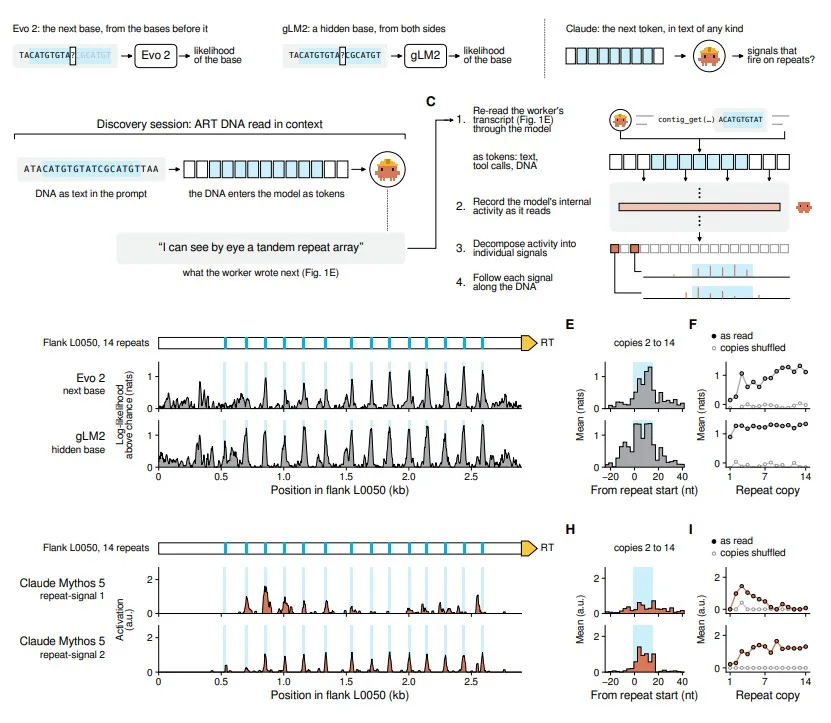
Anthropic says its Claude AI system helped researchers identify a previously uncharacterized enzyme system in bacteriophages, after hundreds of AI agents searched large collections of DNA sequences for unusual biological patterns. The company published the results on September 23 as one of the first projects from a new life sciences research group and laboratory inside Anthropic. The system, which researchers have named array-associated reverse transcriptases, or ARTs, contains repeating DNA sequences that resemble some structural features seen in CRISPR systems. Anthropic cautions that researchers do not yet know what ARTs do or whether they could eventually have similar practical applications. Claude’s genome-mining experimentThe finding came from a large-scale genome-mining experiment in which Claude was asked to look for unusual examples of reverse transcriptases, enzymes that copy RNA into DNA. According to Anthropic, roughly 950 Claude agents spent 21 hours analysing the data, using around 210 million tokens. The agents collected more than 200,000 reverse transcriptases, identified around 3,500 candidate systems and eventually narrowed the search to 20 candidates for closer investigation. One of the agents detected an unusual pattern of repeating DNA sequences next to a reverse transcriptase gene. Researchers then examined the candidate and carried out laboratory experiments to investigate it further. The ART system and CRISPR connectionAnthropic says the resulting ART system consists of a reverse transcriptase, a neighbouring partner gene and a long array of regularly spaced DNA repeats. Early laboratory experiments also found that the array is expressed as a collection of short RNA molecules. That combination attracted attention because CRISPR systems also use arrays containing repeated DNA sequences and RNA molecules. CRISPR systems, originally discovered as part of bacterial defence mechanisms, eventually became one of the most important tools in modern gene editing. The similarity does not mean ART performs the same function. Anthropic said work is continuing to determine what the newly identified system actually does. The reverse transcriptase itself was not entirely unknown. It had previously appeared in research involving a jumbo phage, a type of unusually large virus that infects bacteria. Anthropic says Claude's contribution was identifying the broader biological system surrounding the enzyme, including the repeat array and an additional protein whose function remains unknown. The research is also an early test of a wider idea: using general-purpose AI agents not simply to summarize scientific literature, but to search biological data, generate hypotheses and identify candidates worth testing experimentally. Anthropic’s human-led AI research workflowIn Anthropic's workflow, Claude first reviews existing research and reproduces known findings from public datasets. Agents then search for unusual proteins or genomic structures that do not appear to match previously described systems. Human researchers review the strongest candidates before deciding which ones should move into laboratory testing. That distinction matters. Claude did not independently conduct the physical experiments. Anthropic says all laboratory work was carried out by human scientists in its Bay Area laboratory. The company formed the research group in spring 2026 to explore whether AI systems could accelerate parts of fundamental biology research. The ART project provides an early example of what that model could look like: hundreds of AI agents searching biological datasets in parallel, followed by human scientists deciding which observations deserve further investigation and testing. Independent validation will now be important. Preprint release and expert reactionAnthropic has released its findings as a preprint, while experiments to understand the biological function of ARTs are continuing. Feng Zhang, a professor at MIT and the Broad Institute and one of the researchers closely associated with the development of CRISPR genome-editing technology, described the finding as an interesting example of AI agents contributing to biological discovery, while saying the system requires further investigation. For now, the significance of ART lies less in whether it becomes another CRISPR and more in how it was found. AI systems have already become common tools for analysing scientific literature, predicting protein structures and assisting drug discovery. Anthropic's experiment pushes further toward AI agents actively searching large scientific datasets for patterns that human researchers may not have noticed. Future questions about ARTWhether ART develops into a useful biological tool will depend on what researchers discover next about how the system functions.
Frequently asked questions
What did Claude discover?
Claude helped researchers identify a previously uncharacterized biological system associated with reverse transcriptases in bacteriophages. Anthropic has named the system array-associated reverse transcriptases, or ARTs.
Is ART the same as CRISPR?
No. ARTs contain repeating DNA structures that have some similarities to CRISPR-associated systems, but researchers do not yet know their biological function.
Did Claude make the discovery on its own?
No. Claude agents searched and analysed biological datasets, but human researchers reviewed the findings and carried out the laboratory experiments.
How many AI agents were involved?
Anthropic says around 950 Claude agents worked on the genome-mining process over approximately 21 hours.
Why is this discovery important?
The finding is significant because it shows how AI agents could help researchers search large scientific datasets, identify unusual patterns and generate leads for laboratory investigation.
Has the discovery been fully validated?
The work has been released as a preprint, and further research is still needed to understand what ARTs do and whether they have any practical applications.