AI Data Centers Are Becoming an Electricity Grid Problem
By Suad Seferi ·
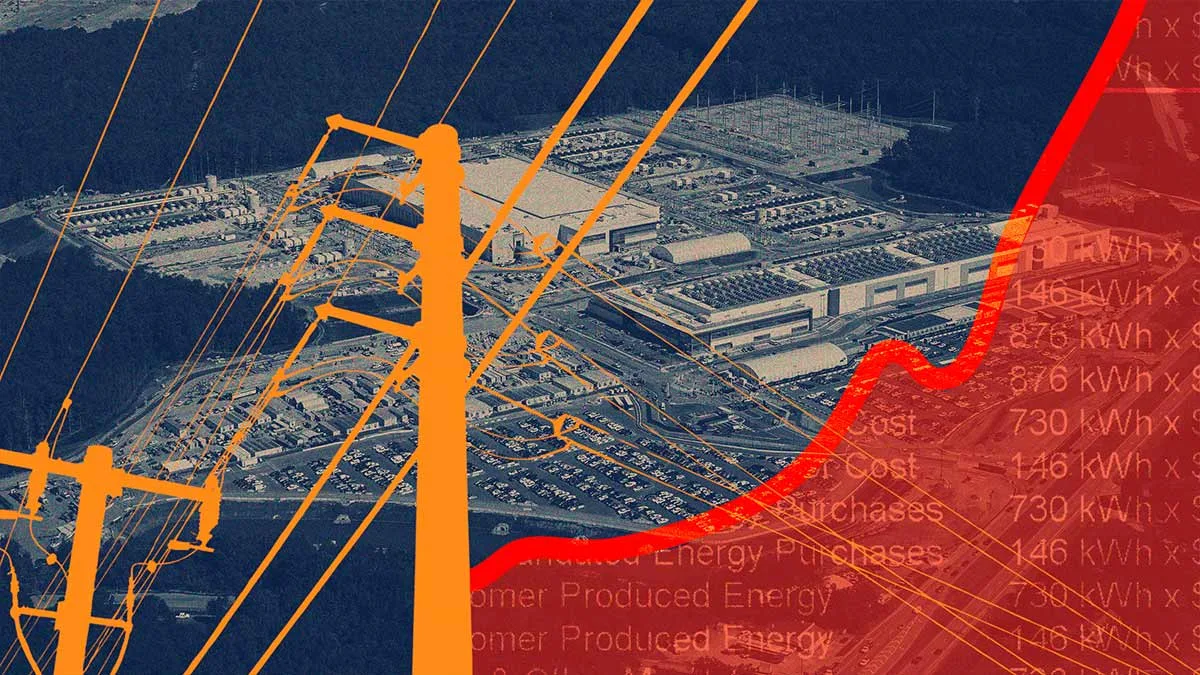
Artificial intelligence is often discussed as software, but the AI race is increasingly becoming an infrastructure race. Behind every chatbot, coding assistant, image generator, AI search engine, and enterprise AI platform is a physical system: data centers, chips, cooling, fiber networks, substations, and electricity grids. That physical layer is now becoming one of the biggest constraints in AI development. Recent action by U.S. federal regulators shows how serious the issue has become. Regional grid operators are being pushed to speed up the connection of large energy users, including AI data centers, to the transmission system. This is not only an American energy story. It is a signal about the next stage of global AI. AI needs power Modern AI systems require enormous computing capacity. Training large models consumes huge amounts of energy. Running those models for millions of users also requires continuous electricity. As AI becomes embedded into search, office software, coding tools, customer service, education platforms, video generation, cybersecurity, and business automation, demand for compute keeps rising. More compute means more data centers. More data centers mean more pressure on the power grid. The AI industry is no longer limited by algorithms alone. It is also limited by energy availability, chip supply, cooling capacity, land, regulation, and grid connection speed. Why grid connection matters A data center cannot operate without reliable electricity. But connecting large new power users to the grid is not simple. Transmission systems were not designed for sudden waves of massive energy demand from AI facilities. In many countries, grid infrastructure is aging, slow to expand, and already under pressure from electrification, industry, renewable energy integration, and climate-related stress. When AI data centers request connection, they may compete with factories, cities, renewable energy projects, and other large users. This creates a policy challenge: how should governments prioritize energy access? If AI data centers receive faster access, other users may worry about fairness, cost, and grid stability. If they do not, AI infrastructure expansion may slow down. The AI infrastructure race The companies leading the AI race are investing heavily in infrastructure. Models are not enough. The winners also need chips, data centers, cloud capacity, energy contracts, and physical resilience. This is why AI infrastructure has become a strategic issue. Countries that can provide reliable power, fast permitting, strong connectivity, and stable regulation may attract AI investment. Countries that cannot may remain consumers of AI tools without owning much of the infrastructure behind them. The debate is no longer only about who builds the best AI model. It is also about who has the electricity to run it. Balkan relevance For the Balkans, this matters more than it may seem. The region is not currently at the center of global AI data-center investment. But AI infrastructure decisions will still affect it. If compute becomes more expensive globally, AI tools may become more costly for users, startups, universities, and businesses in smaller markets. If AI infrastructure concentrates in only a few countries, smaller regions may become more dependent on foreign platforms. If energy systems are not modernized, Balkan countries may struggle to attract serious digital infrastructure investment. At the same time, the region has potential. Some Balkan countries have geographic advantages, renewable energy potential, technical talent, and proximity to European markets. But attracting data centers or AI infrastructure requires more than cheap electricity. It requires grid reliability, regulation, cybersecurity, data protection, political stability, and environmental planning. Environmental and social questions AI data centers also raise environmental questions. Electricity demand affects emissions, water use, cooling systems, local energy prices, and land use. Communities may ask whether data centers create enough local value compared with the resources they consume. Governments will need to decide how to balance innovation with public interest. This means AI infrastructure should not be planned only by technology companies. Energy regulators, municipalities, environmental experts, civil society, and citizens also need a voice. What to watch next The next stage of AI competition will depend on energy. Watch for: new data-center investments government fast-track rules for grid connection AI companies signing energy deals nuclear, renewable, and battery projects linked to AI demand public debates about energy prices local resistance to data-center construction regulation around environmental impact regional competition for AI infrastructure investment For businesses and policymakers in the Balkans, the lesson is clear. AI adoption is not only about software licenses and digital skills. It is also about infrastructure readiness. The countries that want to benefit from AI need to think about power, connectivity, data centers, cybersecurity, and regulation together. Artificial intelligence may live in the cloud. But the cloud still needs electricity.