Macedonian Language Gets Its AI Infrastructure Through Vezilka
By Suad Seferi ·
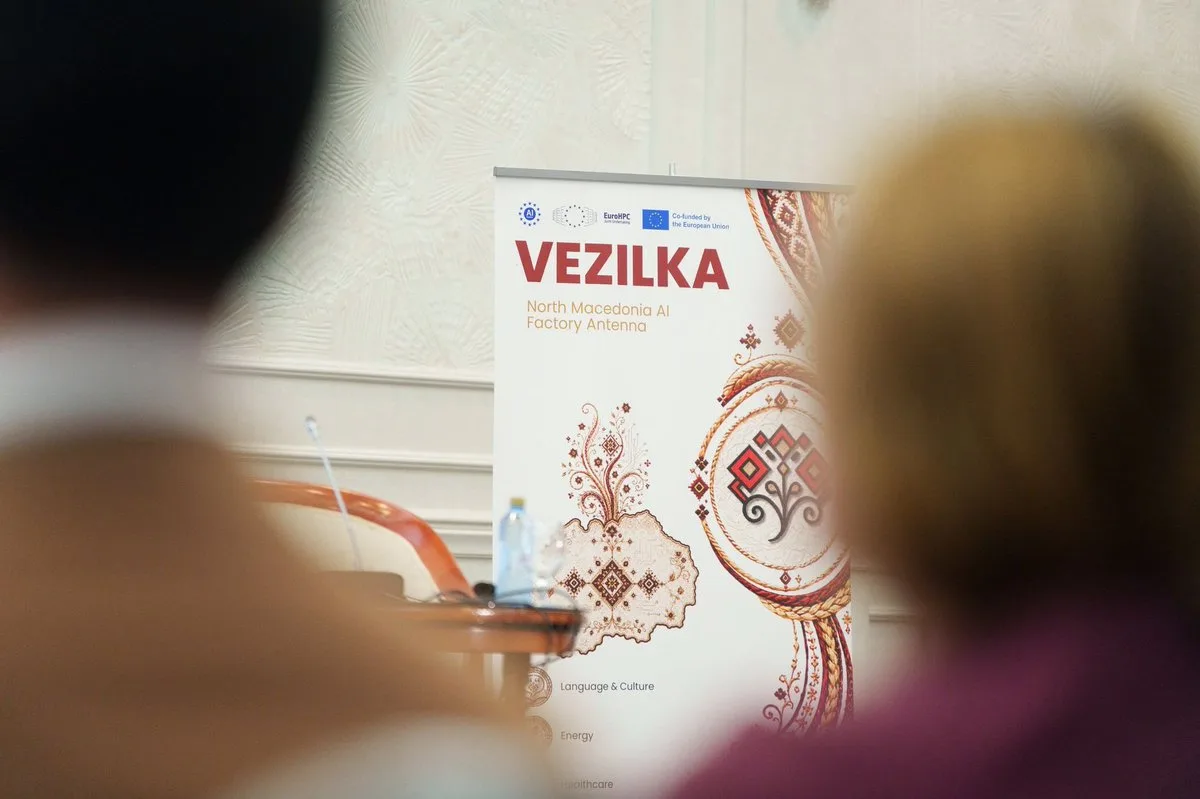
North Macedonia expects to see the first visible results from the protection of the Macedonian language in the digital space this summer, as the National Centre for Artificial Intelligence “Vezilka” begins work on digitizing the Macedonian digital language corpus. Minister of Digital Transformation Stefan Andonovski said on 27 June that Vezilka’s first task will be to digitize the Macedonian language corpus “as much as possible” and turn that work into a practical product: an AI tool that works in Macedonian. He made the comments while answering journalists’ questions after presenting the ministry’s work over the past two years. The statement gives a clearer picture of what Vezilka is expected to become. It is not only a symbolic national AI project. It is being positioned as infrastructure for Macedonian-language artificial intelligence, with future applications in public services and key sectors of the economy and society. A Macedonian-language AI tool According to Andonovski, Vezilka should produce a tool that reads data in Macedonian and generates results in Macedonian. He gave a practical example through the national public-services portal uslugi.gov.mk. Instead of citizens manually searching for services, the portal could ask users what they need and act as an “agent or support” layer, guiding them faster to the right service. The system would also allow background analysis of how users move through the portal and what kind of support they need. This is important because it shifts the discussion from abstract AI strategy to a concrete public-service use case. If implemented well, Vezilka could help citizens interact with digital government services in Macedonian through a more natural and guided interface. That would make AI part of everyday public administration, not only a research or laboratory project. Protecting Macedonian in the AI era Andonovski framed the project as a language and knowledge issue, not only a technology issue. He said small languages “do not have the right to passivity” in the era of artificial intelligence. If Macedonian is not supported in the digital space, it risks being pushed aside by large language models and global platforms. This is the central idea behind Vezilka: Macedonian must be represented in datasets, digital corpora, language models, public services, education tools, and future AI systems. For smaller languages, the quality of AI support depends heavily on the availability of digital data. Languages with richer corpora, more structured documents, and stronger online representation are more likely to perform well in AI tools. Languages with limited digital resources risk weak translation, poor text generation, lower visibility, and reduced usability in future digital services. Five key areas from autumn Andonovski said the second phase of the project is expected to begin in autumn, with implementation in five key areas: energy, public administration, culture, health, and agriculture. These areas show that Vezilka is not being presented only as a language project. It is also expected to support sector-based AI development. In public administration, this could mean smarter digital services and faster access to information.In culture, it could support archives, language preservation, and cultural content.In health, it could help institutions process Macedonian-language information more effectively.In agriculture and energy, it could support data-driven decision-making and internal institutional processes. The challenge will be turning these planned areas into visible tools that citizens, institutions, researchers, and companies can actually use. The role of FINKI and institutions Vezilka is being formed in cooperation with FINKI, the Faculty of Computer Science and Engineering in Skopje. According to Andonovski, FINKI will work with state institutions in areas such as health, agriculture, energy, and other sectors to help them develop internal AI-based processes through Vezilka. The project has been presented as a €6.5 million initiative supported by the European Union, with the state providing more than 90 million denars. Its goal is to develop a large language model in Macedonian, digitize the Macedonian language corpus, and enable AI use in strategic sectors. For North Macedonia, this is a significant step. The country is not simply discussing AI adoption. It is attempting to build national language infrastructure that could support AI tools, institutions, academia, and companies. Why this matters for the Balkans The Vezilka project is relevant beyond North Macedonia because many Balkan countries face the same challenge: how to make sure their languages and local knowledge are not left behind by global AI systems. The Balkans is multilingual, but many regional languages have different levels of digital representation. AI systems may work better in English and other large languages, while smaller or less-resourced languages receive weaker support. That creates a digital inequality problem. If public services, education tools, AI assistants, translation systems, and search platforms do not properly understand local languages, citizens may receive weaker digital services in their own language. That is why language infrastructure is becoming part of AI sovereignty. The key test The most important test for Vezilka will not be the announcement itself. It will be whether the project delivers usable, transparent, and publicly visible results. The public should watch for: how the Macedonian language corpus is created which institutions contribute data whether the data is legally and ethically prepared whether researchers and developers can access tools whether the Macedonian language model is open and documented how well the tools perform in real Macedonian-language use cases whether public-service AI support actually improves user experience The idea of an AI agent on uslugi.gov.mk is especially important. It gives citizens a concrete example of how…