Serbian Teachers Test AI Assistant Built for Classrooms
By Suad Seferi ·
Key takeaways
- Around 250 Serbian teachers currently have access to Petlja's AI Assistant, with 50 to 60 using it actively.
- Teachers are using the system for lesson preparation, exercises, tests and student technology projects, while reviewing and adapting its output.
- Petlja is also working on an open-source model for Serbian education that could eventually run locally and reduce dependence on commercial AI services.
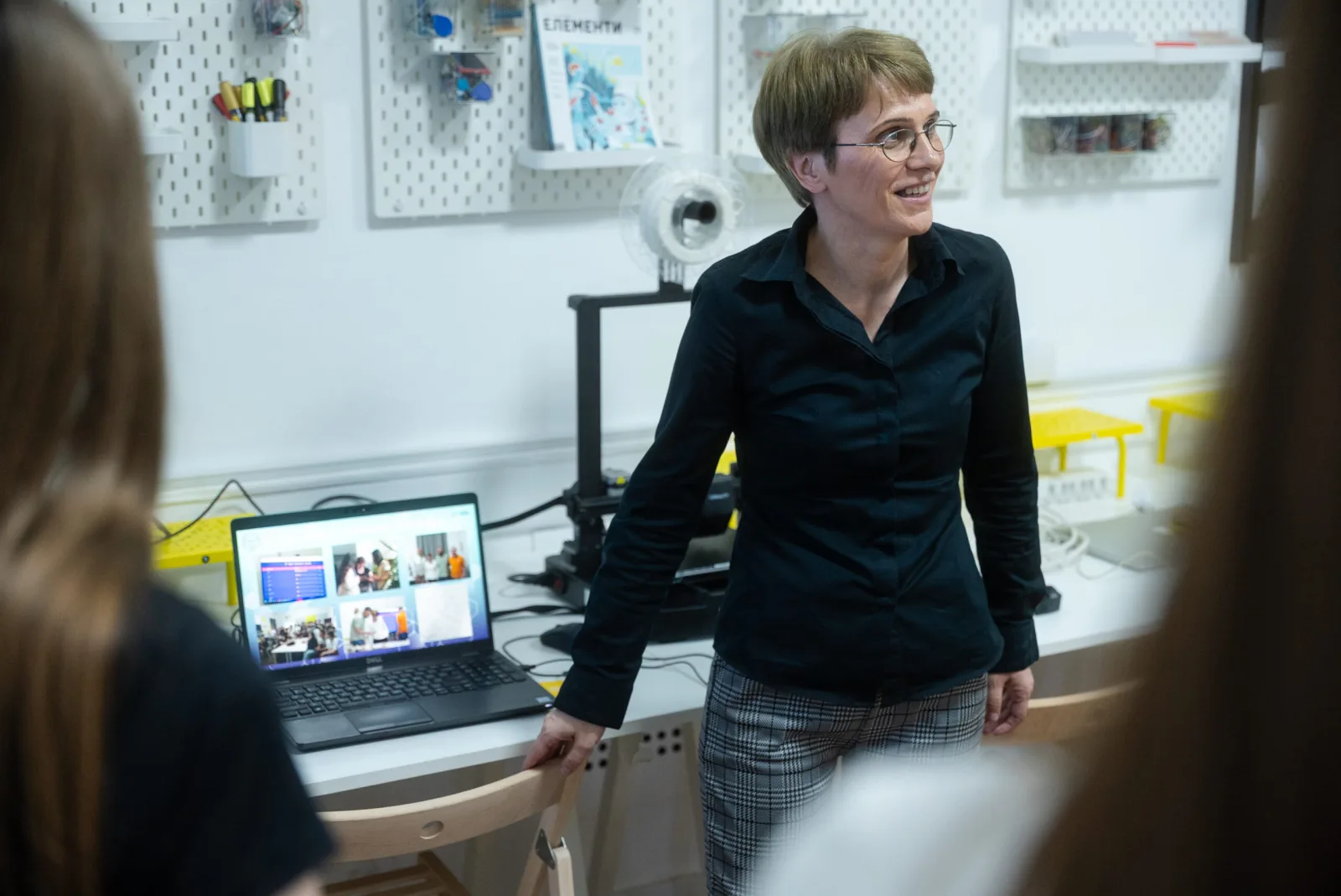
Serbian education nonprofit Petlja Foundation is testing an artificial intelligence assistant designed specifically for teachers, as schools experiment with ways to use AI for lesson preparation, classroom materials and student projects. The Petlja AI Assistant is built on Microsoft Azure and Azure OpenAI Service and is currently available to around 250 teachers in Serbia. Between 50 and 60 use it actively, according to Petlja director Milan Simić. Rather than giving students a general-purpose chatbot, the project focuses primarily on supporting teachers. One of those teachers is Sanja Rajić, who teaches mathematics and programming at the Palanka Gymnasium in Bačka Palanka. She began testing an early version of the assistant in 2023. Rajić uses the tool to prepare lesson structures, generate exercises for different levels of knowledge and create variations of tests. Formal lesson preparation that could previously take hours can be produced as a starting point by the assistant and then reviewed and adapted by the teacher. That distinction is central to how the system is being used. Teachers remain responsible for checking the generated material and deciding what is appropriate for their students. The tool has also found its way into practical student projects. Students at the Palanka Gymnasium have used the assistant while working on robotics, programming and computer vision projects. In one case, students building a mechanical finger used it to help troubleshoot a 3D-printed component when they could not find the required screw locally. Two students from the school also worked on BrAInUp, an educational well-being application created for Serbia's 2026 Student Companies Competition, with Rajić and the AI assistant supporting parts of the technical development. From programming education to AI Petlja was founded in 2017, the same year Serbia introduced programming as a mandatory subject from fifth grade. The foundation initially focused on creating programming and computer science materials that students could use directly through a web browser. Its platform has since expanded into teacher training, digital education and AI-supported learning. Petlja reports more than 100,000 active users over the past three months, with more than 18,000 course participants during the current school year and more than 50 courses available in Serbian. Its work with Serbia's education system includes teacher training, materials for the Digital World subject, resources for specialised IT classes and development of AI tools for education. These activities are carried out through projects involving Serbia's Ministry of Education, the United Nations Development Programme and other partners. Microsoft has supported Petlja through technology, expertise and financial assistance, while Azure provides the infrastructure used by the current AI Assistant. The next step could be a locally hosted model Running an AI assistant for a large number of teachers creates another problem: cost. Every interaction with a commercial AI model carries an operating expense. Petlja is therefore working through the UNICEF TLM4EL project on an open-source model adapted for Serbian education. The plan is to eventually run the model on donated hardware rather than relying entirely on commercial cloud AI services. Petlja says this could lower operating costs and allow more of the system's data to remain under local control. There is not yet a confirmed timeline or funding arrangement for a large-scale rollout. That part of the project could prove more significant than the assistant itself. For education systems across the Western Balkans, introducing generative AI is only one part of the problem. Schools also have to decide who controls the infrastructure, where educational data is processed, how tools work in local languages and who is responsible for checking their output. Petlja's experiment provides one model: start with teachers, keep human review in the process and build the technology around the education system rather than introducing a general AI tool and expecting schools to adapt to it. The next test will be whether that model can move beyond several dozen active users and operate sustainably across a much larger part of Serbia's school system.
Frequently asked questions
What is the Petlja AI Assistant?
It is an AI tool developed by Serbia's Petlja Foundation to support teachers with lesson planning, educational materials and other classroom tasks.
How many teachers are using it?
Around 250 teachers currently have access. Petlja says approximately 50 to 60 are active users.
Does the AI replace teachers?
No. The current model is designed as a support tool. Teachers are expected to review, modify and approve generated materials before using them in class.
Is Petlja developing its own AI model?
Petlja is working through the UNICEF TLM4EL project on adapting an open-source model for Serbian education, with plans for local deployment on donated hardware.