OpenAI Brings Visual Ads to ChatGPT
By Suad Seferi ·
Key takeaways
- OpenAI will begin testing a new visual advertising format in ChatGPT later in October 2026, initially in the United States.
- Visual ads will first appear during image generation but will remain clearly labelled and separate from generated images.
- OpenAI says ChatGPT now reaches 1.2 billion people each week, while its advertising business has already reached a $1 billion annualised revenue run rate.
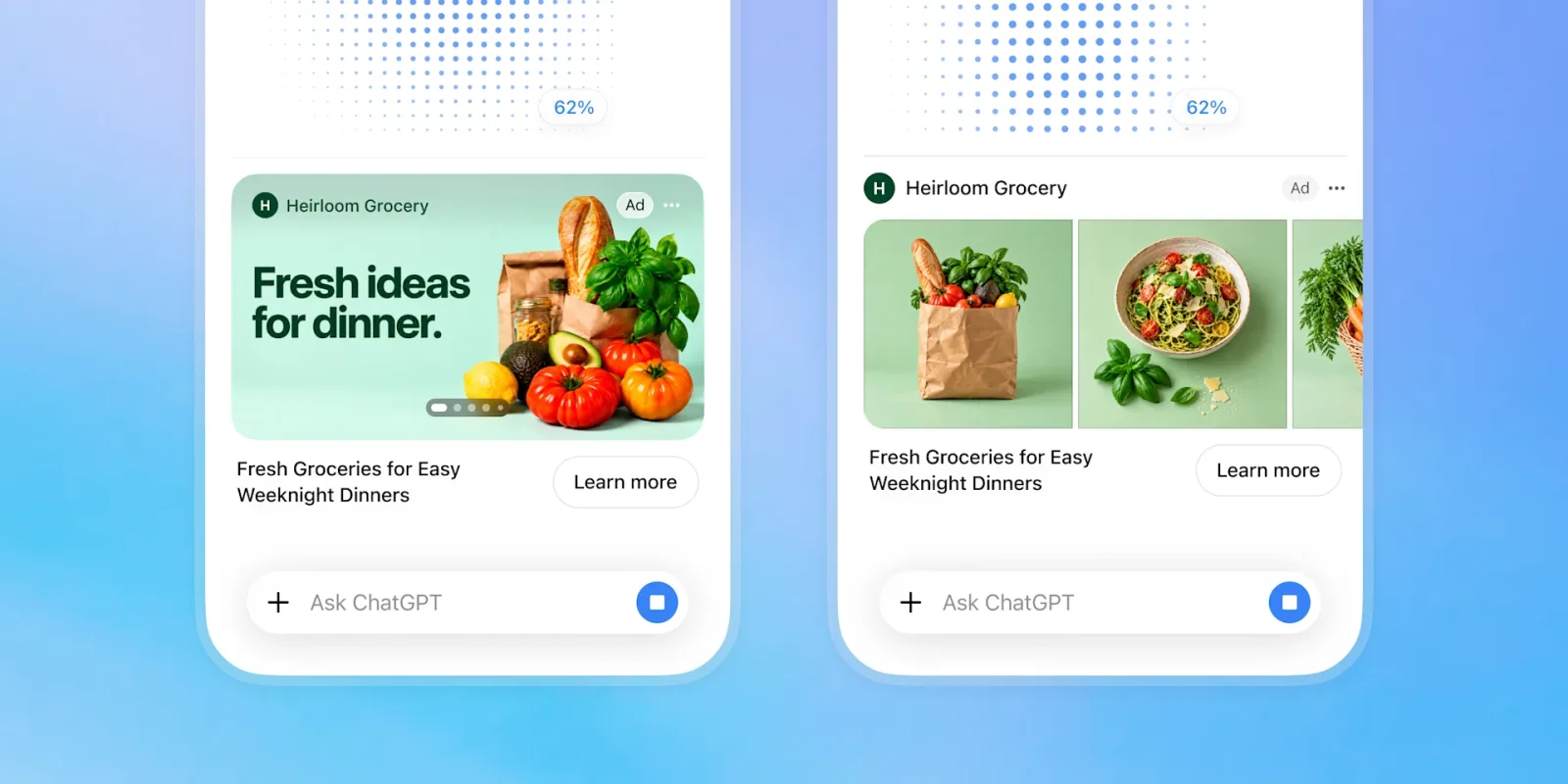
OpenAI is introducing a new visual advertising format inside ChatGPT, extending its growing advertising business into one of the platform’s most prominent features: image generation. The company announced on October 5 that it will begin testing visual ads later this month in the United States with an initial group of advertisers. The ads will appear during image generation and will remain separate from the image itself, according to OpenAI. Rather than relying only on text placements, the new format is designed to show products, services and experiences visually while users are exploring ideas or making purchasing decisions. OpenAI says the ads will be clearly labelled and will not influence the answers ChatGPT provides. The announcement is another step in ChatGPT’s rapid development from an AI assistant into a broader consumer platform where search, shopping, recommendations and advertising increasingly overlap. ChatGPT's advertising business is growing quickly Advertising inside ChatGPT is no longer an experiment at the margins of OpenAI’s business. The company began testing ads with Free and Go users in the United States in February 2026. Since then, it has expanded the advertising programme into additional markets and introduced tools allowing companies and agencies to buy and manage campaigns. By August, OpenAI said ChatGPT Ads had reached a $1 billion annualised revenue run rate less than 200 days after launch. It also opened advertising access across markets including Europe, India, the Middle East and North Africa. The latest announcement says ChatGPT now reaches 1.2 billion people each week, giving OpenAI an audience comparable in scale to some of the world's largest consumer internet platforms. That scale changes the significance of advertising inside an AI assistant. Traditional online advertising typically follows users while they browse websites, social networks or search results. ChatGPT operates differently. People often arrive with an explicit task: comparing products, planning a trip, choosing software, researching a purchase or generating an idea. Advertising is therefore appearing much closer to the point where decisions are being formed. Ads inside image generation The first test of the new format will focus specifically on image generation. OpenAI says advertisers will be able to use images to demonstrate products, show how they might be used or present experiences associated with them. The sponsored content will remain separate from the image generated for the user. The timing is notable. ChatGPT has recently expanded its shopping capabilities, including virtual try-on features for clothing and accessories and the ability to save products inside the platform. Taken together, these developments point toward a version of ChatGPT where product discovery, visualisation, recommendations and transactions become increasingly connected. For brands, that could make conversational AI a new marketing channel. For users, it makes the distinction between an AI recommendation and a paid placement increasingly important. OpenAI says answers will remain independent OpenAI has repeatedly emphasised that advertisements operate separately from ChatGPT's responses. According to the company's advertising policy, advertisers cannot pay to influence, rank or alter the answers generated by ChatGPT. OpenAI also says conversations remain private from advertisers and that user data is not sold to them. Ads currently appear primarily for users on the Free and Go plans. Plus, Pro, Business, Enterprise and Edu subscriptions remain advertising-free. Users identified as being under 18 are also excluded from advertising. OpenAI additionally restricts advertising around sensitive conversations and categories such as political content, mental health, self-harm, weapons and other high-risk areas. These safeguards will become increasingly important as advertising becomes more integrated into the ChatGPT experience. A new competition for the moment of decision For years, Google dominated online advertising partly because users revealed commercial intent through search queries. AI assistants could create another valuable form of intent. Someone asking an assistant to choose a laptop, prepare a holiday itinerary, redesign a living room or compare business software may already be close to making a purchase. That makes the interaction commercially valuable even before the user visits an online shop. OpenAI has been steadily building towards that opportunity. In September, the company introduced sponsored agents that allow users to enter a conversation with a business after interacting with an advertisement. It has also been developing advertising tools, integrations and measurement systems around ChatGPT. The new visual format takes that strategy one step further. The immediate rollout remains limited. Testing starts later in October in the United States, and OpenAI has not announced when visual ads will become available to users in Europe or the Western Balkans. But the direction is becoming clearer: ChatGPT is no longer being developed only as a subscription and software platform. Advertising is becoming a significant part of its consumer business, placing OpenAI increasingly into competition with the companies that have dominated digital advertising for the past two decades.
Frequently asked questions
Will ads influence ChatGPT's answers?
OpenAI says no. Advertising operates separately from the system generating ChatGPT responses, and advertisers cannot pay to change or rank answers.
Who sees ads in ChatGPT?
Ads can currently appear for users on the Free and Go plans. Plus, Pro, Business, Enterprise and Edu plans remain ad-free.
Where will the new visual ads appear?
OpenAI says the first tests will take place during image generation in ChatGPT, with advertisements shown separately from the generated image.
Are visual ChatGPT ads available in Europe?
Not yet as part of this initial test. OpenAI says the visual format will begin testing in the United States later in October. Its broader advertising platform is already to advertisers in multiple European markets.